

Written by Francois Hoogstrate
Last update: 30-07-2026
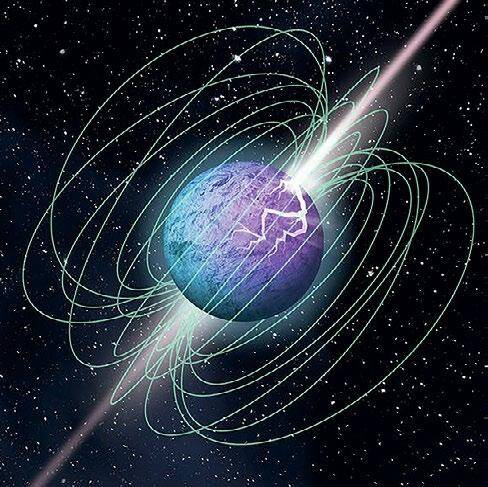
How Dangerous Are Neutron Stars? The Incredible Power of the Universe’s Most Extreme Objects
Quick Answer: How Dangerous Are Neutron Stars?
Neutron stars are among the most extreme objects in the universe, with unimaginable gravity, powerful magnetic fields, and intense radiation. However, they are not a direct threat to Earth because they are located incredibly far away. A neutron star would only become dangerous if an object came extremely close. Their real importance lies in helping scientists understand the limits of physics and the evolution of the universe.
Introduction
When we look up at the night sky, everything appears peaceful. Stars seem like tiny points of light quietly shining above us. But behind that calm view is a universe filled with unimaginable forces, enormous explosions, and objects that seem almost impossible to understand.
One of the most fascinating and extreme objects in the cosmos is the neutron star.
But how dangerous are neutron stars?
The short answer: they are among the most powerful and extreme objects known in the universe.
A neutron star contains the mass of an entire star compressed into a sphere roughly the size of a city. Its gravity is so intense that a small amount of neutron star material would weigh billions of tons if it could somehow be brought to Earth.
However, neutron stars are not dangerous in the same way as black holes. They do not simply travel through space and swallow everything around them. Their true danger comes from the incredible forces they contain: extreme gravity, powerful magnetic fields, intense radiation, and unimaginable amounts of energy.
Neutron stars reveal just how strange and fascinating our universe really is. They are both destructive and beautiful. They help scientists understand how stars die, how heavy elements are created, and how matter behaves under conditions that cannot be recreated on Earth.
In this article, we will explore what neutron stars are, why they are considered dangerous, what would happen if Earth came close to one, and why these mysterious cosmic objects are so important for our understanding of the universe.
Key Takeaways
- Neutron stars are created when massive stars explode in supernova events.
- They are incredibly dense, containing more mass than the Sun in a sphere only around 20 kilometers wide.
- The gravity on the surface of a neutron star is billions of times stronger than Earth's gravity.
- A tiny amount of neutron star material would have an unimaginable weight on Earth.
- Magnetars are a special type of neutron star with the strongest magnetic fields known in the universe.
- A neutron star at a safe distance would not directly threaten Earth.
- Collisions between neutron stars can release enormous amounts of energy and create precious elements like gold.
- Studying neutron stars helps scientists understand the deepest mysteries of physics and the universe.
Table of Contents
- What Exactly Is a Neutron Star?
- How Does a Neutron Star Form?
- Why Are Neutron Stars So Dangerous?
- The Incredible Gravity of a Neutron Star
- What Would Happen If Earth Came Close to a Neutron Star?
- Magnetars: The Most Dangerous Neutron Stars
- Can Neutron Stars Destroy Earth?
- When Neutron Stars Collide: A Cosmic Explosion
- Why Scientists Study Neutron Stars
- The Biggest Mysteries About Neutron Stars
- Conclusion: How Dangerous Are Neutron Stars Really?
1. What Exactly Is a Neutron Star?
A neutron star is the leftover core of a massive star that has reached the end of its life.
When a giant star runs out of nuclear fuel, it can no longer fight against its own enormous gravity. The core collapses inward in a matter of seconds, creating one of the most violent events in the universe: a supernova explosion.
During this collapse, something extraordinary happens.
The pressure becomes so extreme that protons and electrons are forced together, creating neutrons. The result is a tiny but incredibly massive object made mostly of tightly packed neutrons.
This object becomes a neutron star.
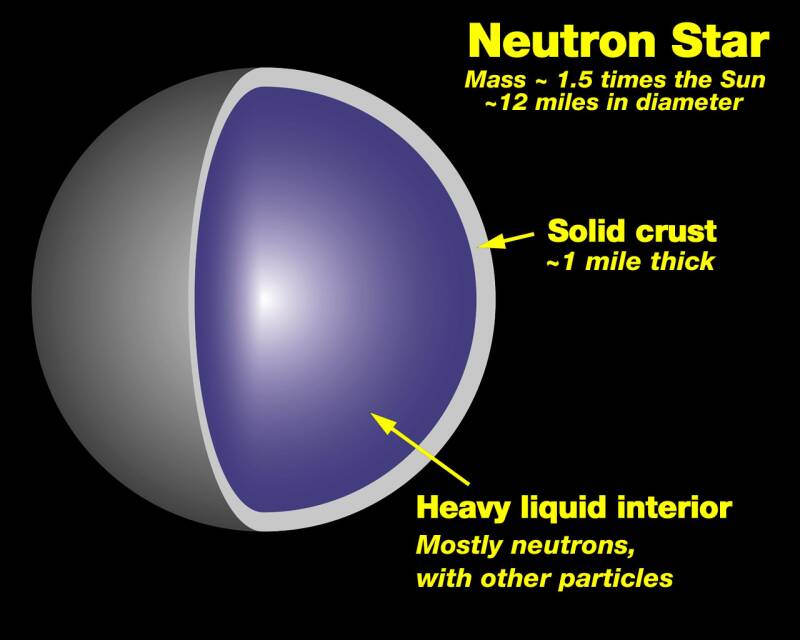
To understand just how extreme a neutron star is, imagine taking the mass of the Sun and squeezing it into a ball only about 20 kilometers across.
The Sun itself has a diameter of approximately 1.4 million kilometers. A neutron star is tiny compared to it, yet it can contain a similar amount of mass or even more.
This means neutron stars are among the densest objects in existence.
A single teaspoon of neutron star material would weigh around billions of tons on Earth.
That is difficult to imagine because nothing on our planet comes close to this kind of density.
A neutron star is essentially the frozen heart of a dead star. It is the final chapter of a massive star’s life, but it can continue existing for billions of years.
In many ways, neutron stars are cosmic time capsules. They preserve information about the violent processes that shaped the universe and continue to challenge everything we know about physics.
2. How Does a Neutron Star Form?
The birth of a neutron star begins with a massive star.
Not every star can become a neutron star. Smaller stars, including our own Sun, do not have enough mass to create the extreme conditions needed. Instead, they eventually become white dwarfs.
A star many times heavier than the Sun follows a very different path.
For millions of years, massive stars produce energy through nuclear fusion. Inside their cores, lighter elements such as hydrogen are transformed into heavier elements.
This process creates the energy that allows stars to shine.
However, stars do not have unlimited fuel.
Eventually, the core runs out of the elements needed to maintain fusion. When that happens, gravity begins to win the battle.
The star’s core collapses under its own enormous weight.
The collapse happens incredibly fast. In less than a second, the core can shrink from something thousands of kilometers wide into an object only a few dozen kilometers across.
The outer layers of the star are then blasted into space in a massive supernova explosion.
This explosion is one of the most powerful events in the universe.
The final result depends on the original size of the star. Some massive stars leave behind neutron stars. Even heavier stars may collapse completely and form black holes.
A neutron star is therefore the surviving heart of a star that once burned brightly for millions of years.
It is a reminder that even the largest stars have a final moment — but their remains can continue shaping the universe long after they are gone.


3. Why Are Neutron Stars So Dangerous?
When people hear about neutron stars, they often imagine a cosmic monster traveling through space and destroying everything in its path.
That picture is understandable, but it is not exactly accurate.
A neutron star is not dangerous because it actively hunts planets or consumes everything around it. Its danger comes from the extreme conditions that exist near it.
The biggest threats created by neutron stars are:
Extreme Gravity
A neutron star contains an enormous amount of mass packed into a very small area.
This creates one of the strongest gravitational fields in the universe.
Anything that came too close would experience forces unlike anything found on Earth.
Powerful Radiation
Many neutron stars release intense radiation, including X-rays and gamma rays.
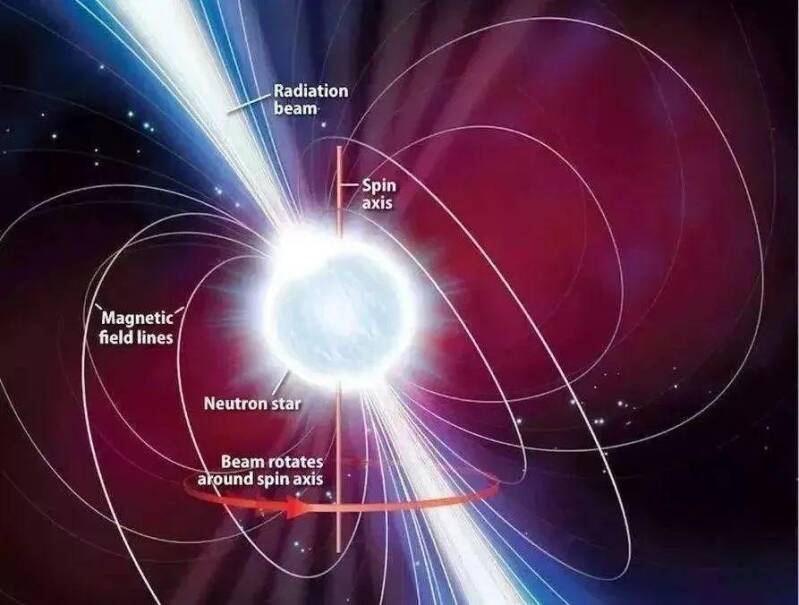
Some rotate rapidly and send beams of radiation into space like a cosmic lighthouse.
Extreme Magnetic Fields
Certain neutron stars, known as magnetars, have magnetic fields billions of times stronger than Earth’s.
These magnetic forces can influence matter in ways scientists are still trying to understand.
Incredible Density
The material inside a neutron star exists under pressures so extreme that normal physics begins to break down.
Scientists study these objects because they represent conditions that cannot be recreated in any laboratory on Earth.
However, there is one important thing to remember:
Distance changes everything.
A neutron star millions of kilometers away is not an immediate threat. Just like the Sun would be deadly if we were close to its surface but harmless from Earth, neutron stars are only dangerous when something gets extremely close.

4. The Incredible Gravity of a Neutron Star
The gravity of a neutron star is perhaps its most impressive feature.
Because so much mass is compressed into such a small space, the gravitational pull becomes incredibly powerful.
The surface gravity of a neutron star can be around 100 billion times stronger than Earth's gravity.
To put that into perspective, a person who weighs 80 kilograms on Earth would experience a completely unimaginable force on a neutron star.
The human body would not survive the pressure.
Gravity would not only affect objects. It would also affect space and time itself.
According to Albert Einstein’s theory of relativity, massive objects bend the fabric of space-time. The stronger the gravity, the greater the effect.
Near a neutron star, time would move differently compared to an area far away from it.
A clock placed near the surface of a neutron star would tick slower than a clock located far away in space.
Another fascinating effect is that neutron stars are extremely smooth.
Because gravity is so powerful, mountains and surface irregularities are almost completely flattened. Scientists believe that any possible “mountains” on a neutron star may only be millimeters high.
A neutron star is therefore not simply a heavy object.
It is a place where gravity becomes so extreme that the normal rules of our everyday experience begin to change.
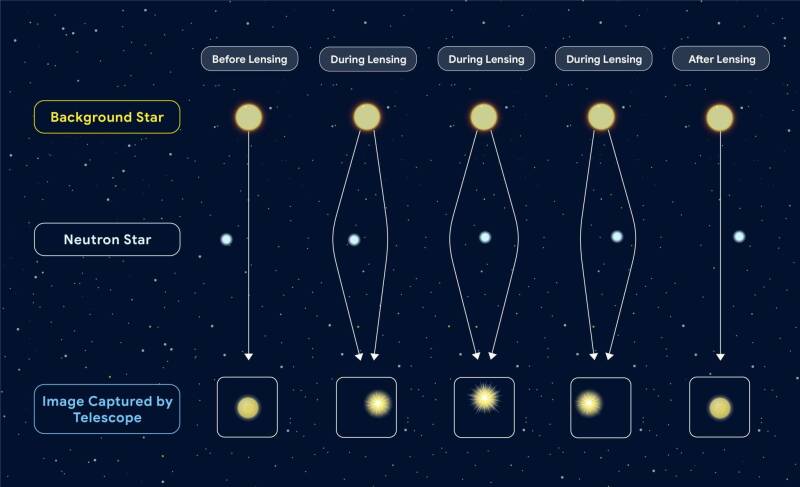

5. What Would Happen If Earth Came Close to a Neutron Star?
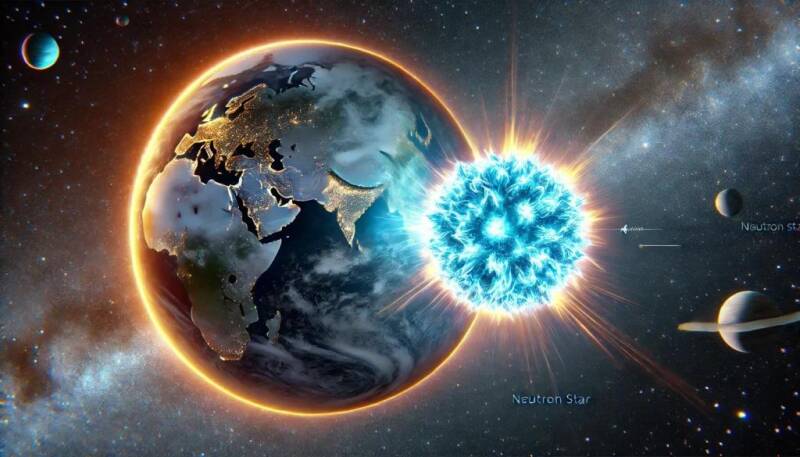
Luckily, Earth is not close to any neutron stars. But what would happen if one approached our solar system?
The answer depends entirely on distance.
If a neutron star passed extremely far away, Earth might barely notice. Its gravity would have some influence, but space is enormous and distance greatly reduces gravitational effects.
However, if a neutron star came close enough, the consequences would be catastrophic.
The first major effect would be changes to planetary orbits.
Because neutron stars are incredibly massive, their gravity could disturb the paths of planets around the Sun. Even a small change in Earth’s orbit could have serious consequences for climate and life.
Another danger would be tidal forces.
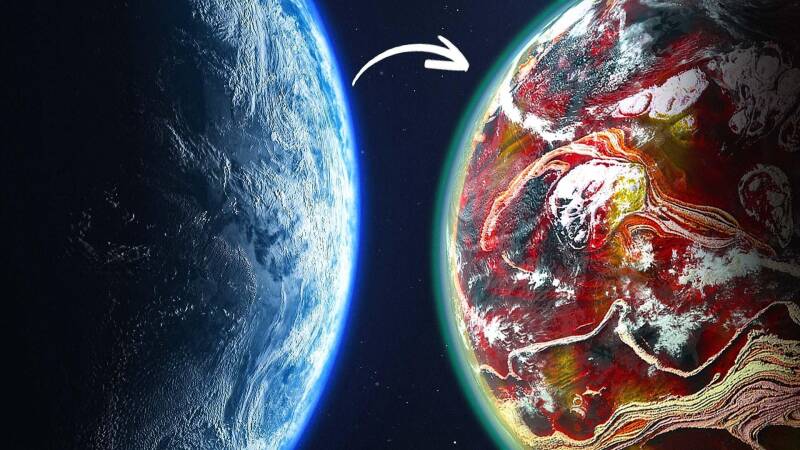
The gravitational difference between the side of Earth facing the neutron star and the opposite side could become so extreme that the planet would begin to deform.
In extreme cases, powerful tidal forces could tear planets apart.
A nearby neutron star would also expose Earth to dangerous radiation.
High-energy radiation from the neutron star could damage the atmosphere and make life impossible.
However, there is no reason to worry about such an event happening.
Neutron stars are rare, and the universe is unbelievably large.
Their danger is real, but their distance protects us.
6. Magnetars: The Most Dangerous Neutron Stars
Not all neutron stars are the same.
Some neutron stars are relatively calm and predictable, while others represent some of the most extreme environments in the entire universe. The most powerful and dangerous type of neutron star is called a magnetar.
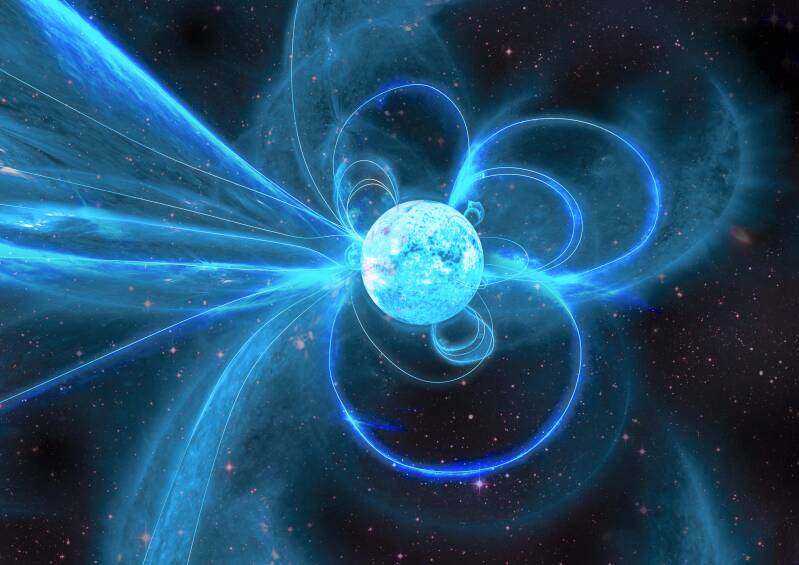
A magnetar is a special type of neutron star with an unbelievably strong magnetic field. While Earth’s magnetic field protects our planet from harmful particles coming from space, the magnetic field of a magnetar is powerful enough to completely change the environment around it.
The magnetic field of a magnetar can be up to a thousand trillion times stronger than Earth’s magnetic field.
This number is almost impossible to imagine.
A magnetar has such an intense magnetic force that it could affect matter from enormous distances. At close range, it would be an extremely hostile environment where normal materials and even atoms could behave in unexpected ways.
Luckily, magnetars are located incredibly far away from Earth.
Why Are Magnetars So Dangerous?
There are three main reasons why magnetars are considered some of the most dangerous objects in the universe.
1. Their Incredible Magnetic Fields
Magnetic fields control the movement of charged particles.
On Earth, magnetic fields are relatively weak and mostly invisible. We notice them through simple things like compasses or the protection they provide against solar particles.
A magnetar takes this concept to an entirely different level.
Its magnetic field is so powerful that it can influence the structure of atoms. Under these extreme conditions, the normal behavior of matter begins to change.
If a magnetar were much closer to Earth, it could interfere with electronics, satellites, and communication systems.
At very close distances, the effects would be far more destructive.
2. Massive Bursts of Energy
Magnetars are famous for producing enormous explosions of energy called magnetar flares.
These events can release more energy in a few seconds than the Sun produces over thousands of years.
The energy is released mainly in the form of high-energy radiation, including gamma rays and X-rays.
One of the most powerful magnetar events ever detected sent radiation across space that could be observed from thousands of light-years away.
These cosmic explosions show just how much energy can be stored inside a neutron star.
A magnetar is like a giant cosmic battery filled with unimaginable power.
3. Starquakes and an Unstable Surface
A neutron star may look like a small, solid object, but inside it is a world of extreme pressure and strange physics.
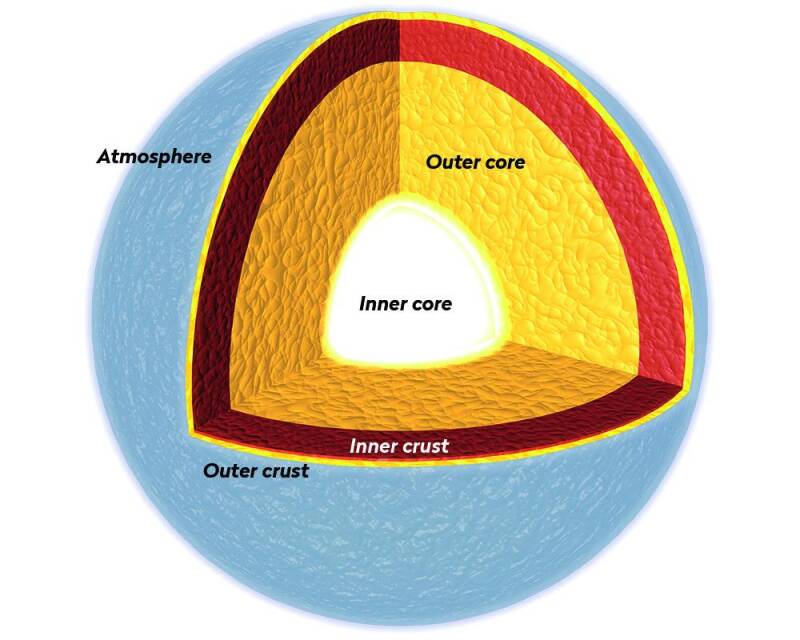
The outer crust of a magnetar can become stressed by the powerful forces inside. Eventually, this stress can cause the crust to crack.
Scientists call these events starquakes.
A starquake can release a huge amount of energy and create powerful bursts of radiation.
It is similar to an earthquake on Earth, but on a scale that is almost impossible to compare.
A magnetar is not dangerous because it moves around destroying everything nearby. It is dangerous because it represents one of the most concentrated sources of energy in the universe.

7. Can Neutron Stars Destroy Earth?
One of the most common questions about neutron stars is:
Could a neutron star destroy Earth?
The answer is: yes, theoretically — but the chances are extremely unlikely.
A neutron star close enough to Earth would absolutely have catastrophic consequences. However, the universe is enormous, and dangerous objects are usually separated by unimaginable distances.
A neutron star is not like a cosmic predator searching for planets.
It does not move through space looking for things to consume.
The danger only appears when another object gets too close.
What Would Happen If a Neutron Star Approached Earth?
If a neutron star entered our solar system, several devastating effects could occur.
Planetary Orbit Disruption
A neutron star has a huge amount of mass.
Even without touching anything, its gravity could disturb the movement of planets.
Earth’s orbit around the Sun is carefully balanced. A major gravitational disturbance could change our distance from the Sun, affecting temperatures, seasons, and the stability of life.
Extreme Tidal Forces
Gravity does not pull equally on every part of an object.
The side of Earth facing a neutron star would experience a stronger gravitational pull than the opposite side.
This difference creates tidal forces.
At extreme distances, these forces could stretch and deform planets.
In the most dramatic cases, a planet could be torn apart completely.
Radiation Exposure
Many neutron stars emit powerful radiation.
A nearby neutron star could release enough high-energy radiation to damage Earth’s atmosphere and threaten all living organisms.
Gamma rays and X-rays are especially dangerous because they carry enormous amounts of energy.
However, there is no known neutron star currently posing such a threat to Earth.
The biggest lesson is this:
Neutron stars are incredibly dangerous nearby, but harmless from a safe distance.


8. When Neutron Stars Collide: A Cosmic Explosion
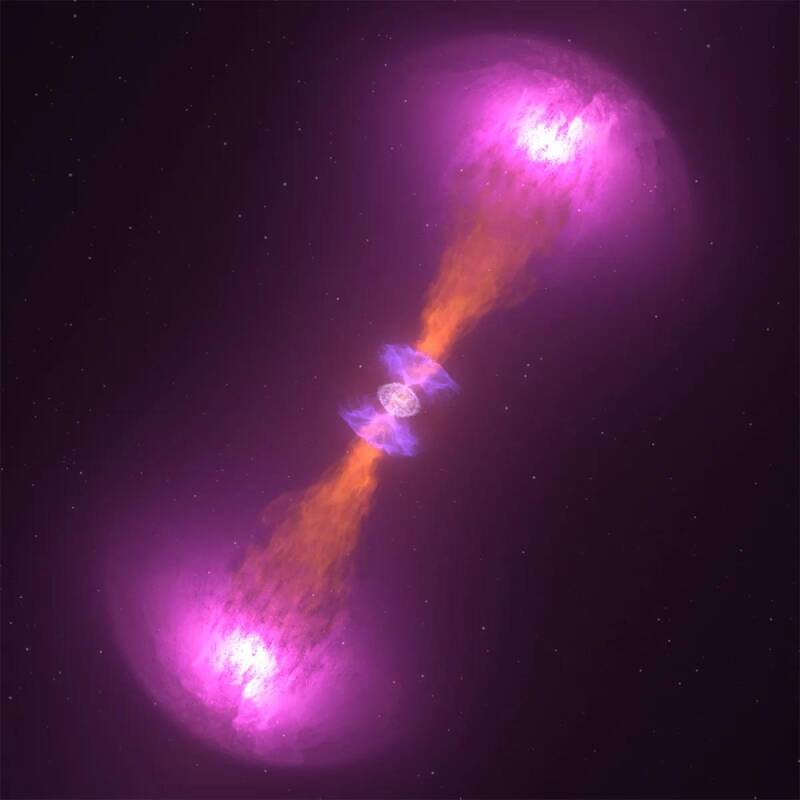
One of the most spectacular events in the universe happens when two neutron stars collide.
This event is known as a kilonova.
A neutron star collision is among the most powerful explosions scientists have ever observed.
The process begins when two neutron stars orbit each other.
Over time, they lose energy through gravitational waves. As they lose energy, they slowly move closer together.
Eventually, they collide.
The result is a violent cosmic event that releases enormous amounts of energy, radiation, and matter into space.
The Creation of Precious Elements
One of the most fascinating discoveries about neutron star collisions is that they create some of the heaviest elements in the universe.
Elements such as:
- Gold
- Platinum
- Uranium
can form during these extreme events.
This means that some of the precious metals found on Earth may have originated from ancient neutron star collisions billions of years ago.
The gold in jewelry, for example, may have been created during a cosmic explosion long before Earth even existed.
That idea is truly remarkable.
The atoms around us carry the history of the universe itself.
The Discovery of Gravitational Waves
In 2017, scientists detected gravitational waves produced by the collision of two neutron stars for the first time.
This was a historic discovery.
Before this, astronomers mainly studied the universe through light.
Gravitational waves opened a completely new way of exploring space.
Instead of only seeing cosmic events, scientists could now detect the vibrations created by massive objects moving through space-time.
Neutron star collisions showed us that the universe can be studied in ways that were once considered impossible.

9. Why Scientists Study Neutron Stars
At first glance, neutron stars may appear to be nothing more than dangerous cosmic objects.
However, for scientists, they are incredibly valuable.
They act as natural laboratories where the universe performs experiments that humans could never recreate on Earth.
Understanding Extreme Physics
Inside a neutron star, matter exists under conditions beyond anything we can produce in laboratories.
Scientists study neutron stars to answer questions like:
- How does matter behave under extreme pressure?
- What happens when atoms are compressed beyond normal limits?
- Could unknown forms of matter exist inside neutron stars?
These questions help us understand the fundamental rules of nature.
Learning How Stars Live and Die
Neutron stars also teach us about the life cycle of stars.
By studying them, scientists learn more about:
- Supernova explosions
- The creation of heavy elements
- The evolution of galaxies
- The formation of cosmic structures
Every neutron star carries information about the star that created it.
It is like a fossil from a previous generation of the universe.
Testing Einstein’s Theories
Neutron stars provide one of the best environments for testing Einstein’s theory of relativity.
Their extreme gravity allows scientists to study how space and time behave under conditions that are impossible to recreate on Earth.
Every discovery helps us understand the universe more accurately.

10. The Biggest Mysteries About Neutron Stars
Although scientists have learned a great deal about neutron stars, many mysteries remain.
These objects continue to challenge our understanding of physics.
What Exists Inside a Neutron Star?
The outside of a neutron star is relatively well understood.
The inside is much more mysterious.
Scientists believe the core may contain unusual forms of matter that do not exist anywhere else in the universe.
Some theories suggest that the deepest regions may contain quark matter.
Quarks are the tiny particles that make up protons and neutrons.
Under the enormous pressure inside a neutron star, these particles may behave in completely new ways.
However, scientists still do not know exactly what happens deep inside.
What Is the Maximum Size of a Neutron Star?
There is a limit to how massive a neutron star can become.
If it gains too much mass, gravity may become stronger than the forces holding the star together.
At that point, the neutron star could collapse into a black hole.
Scientists are still researching the exact maximum mass limit.
Every new neutron star discovery helps refine our understanding.
Why Do Some Neutron Stars Spin So Fast?
Many neutron stars rotate at incredible speeds.
Some spin hundreds of times every second.
This happens because the original star was already rotating before it collapsed.
A good comparison is an ice skater pulling in their arms. As the size of the spinning object decreases, the rotation speed increases.
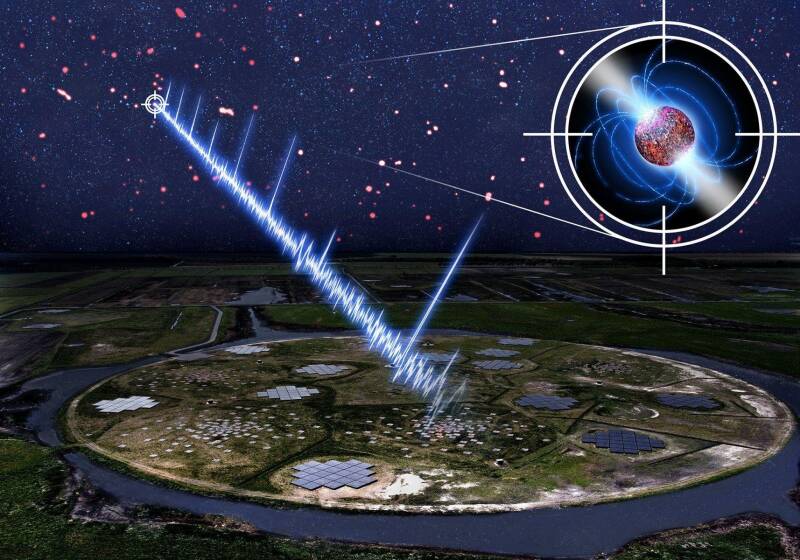
Some rapidly rotating neutron stars are called pulsars.
Pulsars act like cosmic lighthouses.
They send beams of radiation into space, and every time those beams point toward Earth, telescopes detect a repeating signal.
These signals allow scientists to study neutron stars from across the universe.

Frequently Asked Questions About Neutron Stars
Myth vs Reality: Common Misconceptions About Neutron Stars
Neutron stars are some of the strangest objects in the universe, which means they are often surrounded by myths and misunderstandings.
Let’s separate the facts from fiction.
Myth 1: A Neutron Star Would Automatically Destroy Earth If It Entered Our Solar System
Reality:
A neutron star is incredibly powerful, but it is not a cosmic vacuum cleaner that automatically destroys everything nearby.
Like any object with mass, its gravitational influence depends on distance.
If a neutron star passed close enough to Earth, the consequences would be catastrophic. It could disrupt planetary orbits, create extreme tidal forces, and expose Earth to dangerous radiation.
However, a neutron star millions of kilometers away would not suddenly pull Earth apart.
The universe is enormous, and distance is our greatest protection.
Myth 2: Neutron Stars Are More Dangerous Than Black Holes
Reality:
Neutron stars and black holes are both extreme objects, but they are dangerous in different ways.
A black hole has gravity so strong that even light cannot escape once it crosses the event horizon.
A neutron star, on the other hand, has a physical surface and does not automatically consume everything around it.
A neutron star can produce stronger magnetic fields and intense radiation, while a black hole is famous for its extreme gravitational effects.
Both are fascinating, but they are dangerous for different reasons.
Myth 3: A Neutron Star Is Made Completely of Neutrons
Reality:
Although the name suggests that neutron stars are simply giant balls of neutrons, the reality is more complicated.
The outer layers are mostly made of neutron-rich material, but the deeper interior may contain exotic states of matter that scientists still do not fully understand.
Some theories suggest the presence of unusual particles such as quark matter.
The inside of a neutron star remains one of the biggest mysteries in modern physics.
Myth 4: Neutron Stars Move Through Space Destroying Planets
Reality:
Movies and science fiction often portray neutron stars as wandering cosmic destroyers.
In reality, neutron stars usually remain in stable orbits just like other astronomical objects.
They do not search for planets or travel across galaxies consuming everything in their path.
Their danger comes from their extreme properties, not from movement.
Myth 5: If You Landed on a Neutron Star, You Would Simply Be Crushed
Reality:
Being crushed is actually an understatement.
The gravity on a neutron star is so powerful that a human body would be destroyed almost instantly.
The pressure would be far beyond anything biological material could survive.
The problem would not just be your weight — the extreme gravitational forces would tear apart the structure of matter itself.
General FAQ: Questions About Neutron Stars
1. What Is a Neutron Star?
A neutron star is the incredibly dense leftover core of a massive star after it explodes in a supernova.
It contains a huge amount of mass compressed into a very small space, making it one of the densest objects known in the universe.
2. How Big Is a Neutron Star?
Most neutron stars are only about 20 kilometers wide.
To compare that with Earth, a neutron star could easily fit inside a large city.
Despite its small size, it can contain more mass than the Sun.
3. How Heavy Is a Neutron Star?
A typical neutron star contains around 1.4 times the mass of the Sun.
Because all that mass is compressed into such a small object, its density is almost impossible to imagine.
A teaspoon of neutron star material would weigh billions of tons on Earth.
4. Are Neutron Stars Dangerous to Earth?
No known neutron star currently threatens Earth.
They are only dangerous if an object gets extremely close.
From a safe distance, neutron stars are simply fascinating astronomical objects that scientists can study.
5. What Is the Difference Between a Neutron Star and a Black Hole?
The main difference is that a neutron star still has a physical surface, while a black hole is a region of space where gravity has become so extreme that nothing can escape.
Neutron stars are extremely dense, while black holes are even more extreme gravitational objects.
6. What Is a Magnetar?
A magnetar is a special type of neutron star with an incredibly powerful magnetic field.
Magnetars can produce enormous bursts of radiation and are considered among the most extreme objects in the universe.
7. Can a Neutron Star Destroy the Sun?
If a neutron star came extremely close to the Sun, its gravity could cause major disruption.
It could affect the Sun’s structure and potentially disturb the stability of the solar system.
However, such an event is extraordinarily unlikely.
8. How Fast Do Neutron Stars Spin?
Some neutron stars rotate hundreds of times per second.
The fastest known neutron stars can complete a full rotation in only a few milliseconds.
These rapidly spinning objects are known as pulsars.
9. Can Humans Visit a Neutron Star?
No.
Current technology cannot travel anywhere near a neutron star.
Even if humans could reach one, the extreme gravity, radiation, and pressure would make survival impossible.
10. Why Are Neutron Stars Important?
Neutron stars help scientists understand:
- how stars die;
- how heavy elements are created;
- how matter behaves under extreme pressure;
- how gravity affects space and time.
They are natural laboratories that reveal the deepest secrets of physics.
11. Could a Neutron Star Become a Black Hole?
Yes.
If a neutron star gains enough mass, its own gravity may become too strong for neutron pressure to support it.
When this happens, the neutron star can collapse into a black hole.
12. Are Neutron Stars Rare?
Compared to ordinary stars, neutron stars are relatively rare.
However, considering the enormous number of stars in the universe, there are likely millions or even billions of neutron stars spread throughout space.
Final Thought
Neutron stars may sound like something from science fiction, but they are real.
They are extreme, powerful, and sometimes dangerous — yet they are also essential pieces of the cosmic puzzle.
The same universe that creates these incredible objects also creates planets, oceans, life, and everything we know.
Understanding neutron stars is not only about studying danger.
It is about understanding where we came from.
11. Conclusion: How Dangerous Are Neutron Stars Really?
Neutron stars are among the most extreme objects in the entire universe.
They combine:
- Incredible gravity
- Unimaginable density
- Powerful magnetic fields
- Massive amounts of energy
But are they actually dangerous to Earth?
The answer depends on perspective.
A neutron star close to Earth would be catastrophic. Its gravity could disrupt planets, its radiation could threaten life, and its extreme forces could destroy matter.
However, neutron stars are usually located incredibly far away.
From a safe distance, they are not a threat.
Instead, they are one of the greatest scientific wonders in existence.
Neutron stars show us the limits of physics. They reveal how powerful the universe can be and help us understand where the elements around us came from.
Without the violent deaths of massive stars and the extreme processes connected to neutron stars, many of the elements needed for planets, technology, and life itself would not exist.
So, how dangerous are neutron stars?
They are deadly if you get too close.
But from millions or billions of kilometers away, they are something much more valuable:
They are windows into the deepest secrets of the universe.
They remind us that the cosmos is not only vast and beautiful — it is also incredibly powerful.
Want to Learn More?
Are you fascinated by space exploration, astronomy, and the greatest mysteries of our universe?
Follow our blog for more in-depth articles about NASA, historic space missions, scientific discoveries, and the facts behind the most discussed stories from space.
Stay informed about the latest developments as well as the fascinating mysteries that the universe still has waiting for us.
Francois Hoogstrate
Founder & Editor of DeepSpaceJournal
Francois Hoogstrate researches and writes about astronomy, NASA missions, cosmology, planetary science, and space exploration. His articles focus on presenting complex scientific topics in a clear, balanced, and accessible way, using information from official space agencies, scientific publications, and historical sources.
Sources & References
- NASA – Neutron Stars & Magnetars
https://science.nasa.gov/universe/stars/neutron-stars/ - NASA – Magnetars
https://www.nasa.gov/universe/stars/neutron-stars/magnetars/ - NASA – Where Does Gold Come From? NASA Data Has Clues (over magnetars en zware elementen)
https://science.nasa.gov/universe/stars/neutron-stars/magnetars/where-does-gold-come-from-nasa-data-has-clues/ - NASA – NASA Missions Catch First Light from a Gravitational-Wave Event (GW170817, botsing van twee neutronensterren)
https://science.nasa.gov/missions/hubble/nasa-missions-catch-first-light-from-a-gravitational-wave-event/ - NASA – NASA Researchers Probe Tangled Magnetospheres of Merging Neutron Stars
https://science.nasa.gov/science-research/nasa-researchers-probe-tangled-magnetospheres-of-merging-neutron-stars/ - NASA – NASA's IXPE Finds Powerful Magnetic Fields and Solid Crust at Neutron Star
https://www.nasa.gov/centers-and-facilities/marshall/nasas-ixpe-finds-powerful-magnetic-fields-and-solid-crust-at-neutron-star/ - LIGO Scientific Collaboration – GW170817: Observation of Gravitational Waves from a Binary Neutron Star Inspiral
https://www.ligo.caltech.edu/page/press-release-gw170817 - ESA (European Space Agency) – INTEGRAL Mission (gamma-ray observatory die o.a. neutronensterren en magnetars bestudeert)
https://www.esa.int/Science_Exploration/Space_Science/Integral - ESA – Neutron Stars
https://www.esa.int/Science_Exploration/Space_Science - Encyclopaedia Britannica – Neutron Star
https://www.britannica.com/science/neutron-star
Add comment
Comments