

Written by Francois Hoogstrate
Last update: 05-07-2026
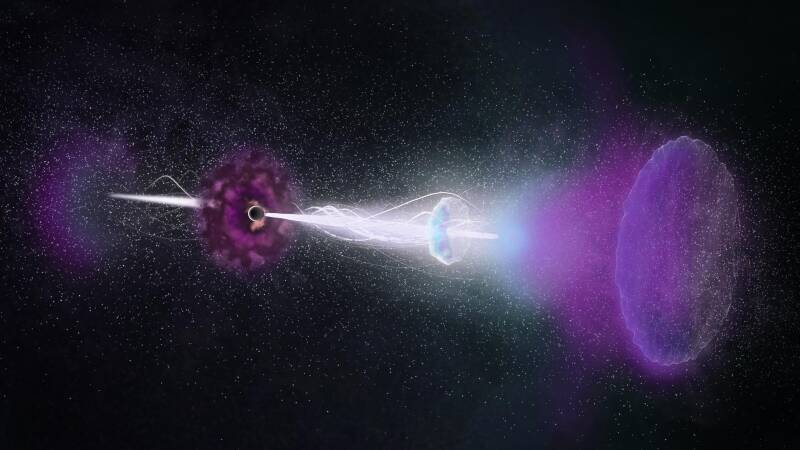
Quick Answer
A gamma-ray burst cannot physically destroy Earth, but a nearby burst aimed directly at our planet could severely damage the ozone layer and expose life to dangerous ultraviolet radiation. While such an event could contribute to a mass extinction, scientists consider the risk to Earth extremely low because the required conditions are extraordinarily rare.
Key Takeaways
- Gamma-ray bursts (GRBs) are the most powerful explosions in the universe.
- A GRB cannot blow Earth apart, but it could damage the atmosphere.
- The greatest risk is ozone layer depletion and increased UV radiation.
- A dangerous GRB would need to occur nearby and point directly at Earth.
- Scientists believe the probability of this happening is extremely low.
- Studying GRBs helps us understand black holes, neutron stars, and stellar evolution.
Table of Contents
- What Is a Gamma-Ray Burst?
- Types of Gamma-Ray Bursts
- Why Are Gamma-Ray Bursts So Powerful?
- Could a Gamma-Ray Burst Destroy Earth?
- How Close Would It Need to Be?
- Has Earth Ever Been Hit?
- What Would Happen If It Hit Earth?
- Could Humans Survive?
- How Scientists Detect Gamma-Ray Bursts
- Why Scientists Study Gamma-Ray Bursts
- Gamma-Ray Bursts vs Other Space Threats
- How Likely Is It?
- FAQ
- Final Conclusion
Can Gamma-Ray Bursts Destroy Earth? The Truth About the Universe’s Most Powerful Explosions
The universe is filled with incredible and sometimes terrifying events. Among the most powerful phenomena ever discovered are gamma-ray bursts, also known as GRBs. These cosmic explosions can release more energy in just a few seconds than the Sun will produce during its entire lifetime.
A natural question comes to mind:
Can a gamma-ray burst destroy Earth?
The short answer is: yes, a gamma-ray burst could potentially cause catastrophic damage to Earth under very specific conditions. However, the chances of this happening are extremely low. Scientists consider gamma-ray bursts to be one of the most powerful events in the universe, but also one of the least likely cosmic threats to affect our planet.
To understand the real danger, we need to look deeper into what gamma-ray bursts are, how they work, how close one would need to be to harm Earth, and whether our planet has ever experienced one before.
This article explores the science behind gamma-ray bursts, their possible effects on Earth, and why astronomers continue to study these mysterious explosions.
What Is a Gamma-Ray Burst?
A gamma-ray burst (GRB) is a sudden flash of extremely high-energy radiation that comes from distant parts of the universe. These bursts are among the brightest and most energetic events known in astronomy.
Gamma rays are the most energetic form of electromagnetic radiation. They have much more energy than visible light, radio waves, or ultraviolet radiation.
When a gamma-ray burst occurs, it can release an enormous amount of energy in a very short period of time. Some bursts last only a fraction of a second, while others can continue for several minutes.
Despite their incredible power, gamma-ray bursts are usually located billions of light-years away from Earth, meaning their energy is spread across a huge distance before reaching us.
Scientists first discovered gamma-ray bursts in the late 1960s when military satellites designed to detect nuclear explosions accidentally detected mysterious flashes coming from space. At first, researchers did not know what caused them.
For decades, gamma-ray bursts remained one of astronomy’s greatest mysteries. Today, scientists understand much more about these events, although some details are still being investigated.

The Two Main Types of Gamma-Ray Bursts
Astronomers divide gamma-ray bursts into two main categories:
1. Long Gamma-Ray Bursts
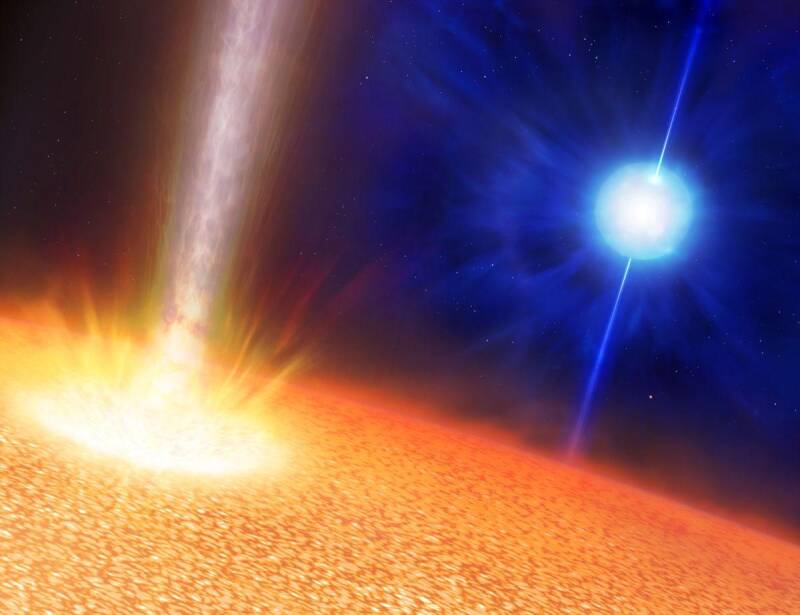
Long-duration gamma-ray bursts usually last more than two seconds. They are often associated with the deaths of massive stars.
When a very large star runs out of fuel, its core can collapse under its own gravity. This collapse may create a black hole or a highly magnetic neutron star.
During this violent process, powerful jets of radiation can shoot outward from the star’s poles. If one of these jets points toward Earth, we could detect it as a gamma-ray burst.
These events are sometimes connected with a type of supernova called a collapsing massive-star explosion.
Long gamma-ray bursts are among the most dramatic deaths in the universe.
2. Short Gamma-Ray Bursts
Short gamma-ray bursts last less than two seconds. They are usually caused by the collision of extremely dense objects.
Examples include:
- two neutron stars merging together
- a neutron star merging with a black hole
These events create enormous amounts of energy and can produce gravitational waves, ripples in space-time predicted by Albert Einstein’s theory of relativity.
When two neutron stars collide, the result is one of the most extreme environments imaginable. Matter is compressed to incredible densities, and enormous amounts of radiation can be released.


Why Are Gamma-Ray Bursts So Powerful?
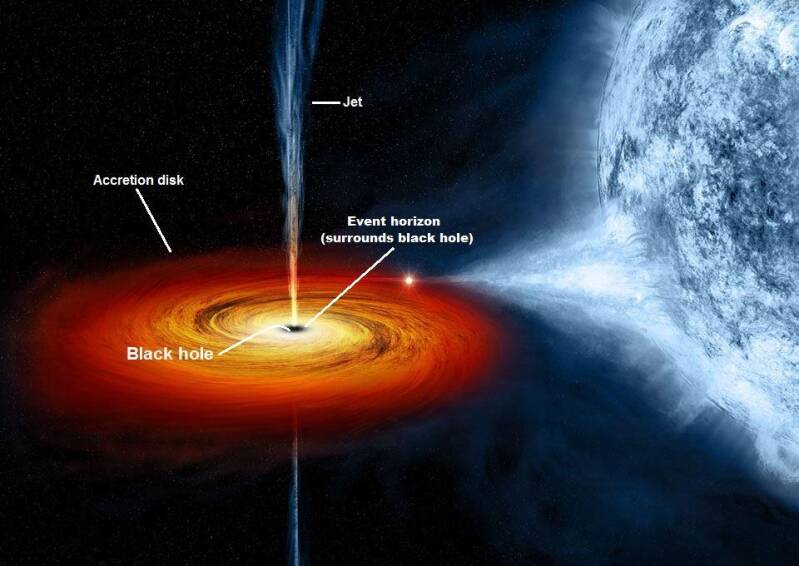
A gamma-ray burst is powerful because it concentrates an enormous amount of energy into narrow beams called relativistic jets.
These jets can travel close to the speed of light.
Imagine taking all the energy produced by billions of stars and focusing it into a narrow beam. That is what makes gamma-ray bursts so dangerous.
However, there is an important detail:
Gamma-ray bursts are only dangerous if Earth is directly in the path of the jet.
The explosion itself does not send equal energy in every direction. Instead, most of the radiation is focused into two opposite beams.
If a gamma-ray burst happened nearby but the beam missed Earth, we would likely observe it without experiencing major effects.

Could a Gamma-Ray Burst Destroy Earth?
The idea of a cosmic explosion destroying Earth sounds like science fiction, but scientists have seriously studied this possibility.
A gamma-ray burst would not physically blow up Earth like a giant bomb. Our planet is far too massive for radiation alone to break it apart.
Instead, the danger comes from the effects on Earth's atmosphere and ecosystems.
A powerful gamma-ray burst pointed directly at Earth could cause:
- destruction of part of the ozone layer
- increased ultraviolet radiation from the Sun
- damage to plants and animals
- disruption of food chains
- possible mass extinction events
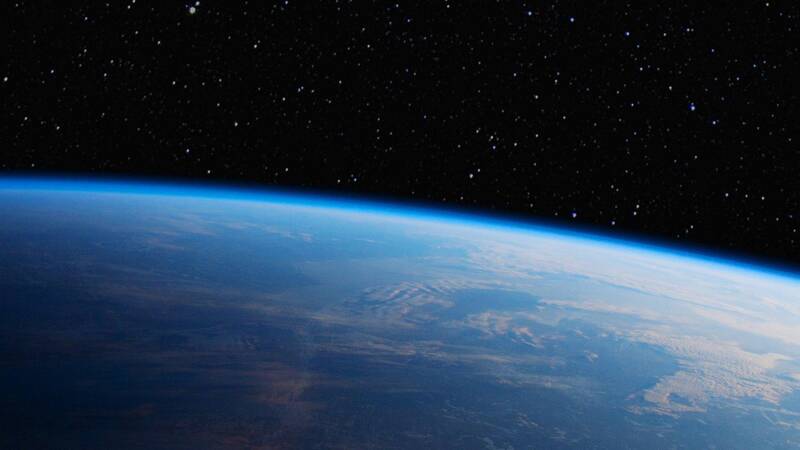
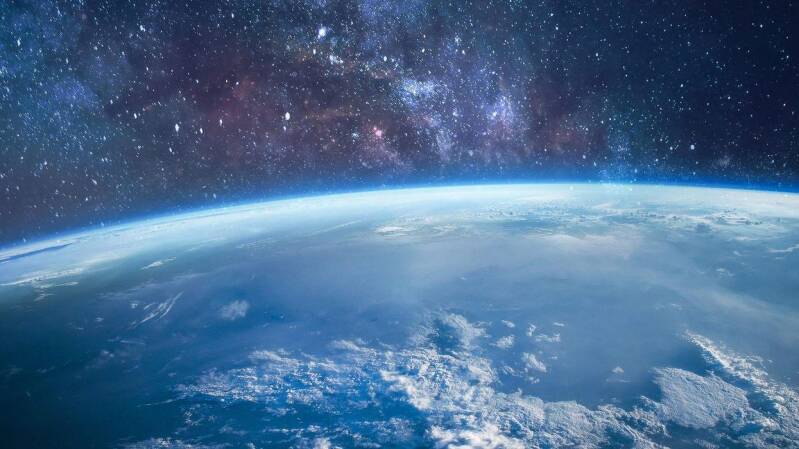
The atmosphere is Earth’s natural shield. It protects life from dangerous radiation coming from space.
A nearby gamma-ray burst could damage this protective layer, especially the ozone layer that blocks harmful ultraviolet radiation.
Without enough ozone protection, the surface of Earth would become a much harsher environment for many forms of life.

How Close Would a Gamma-Ray Burst Need to Be to Harm Earth?
Scientists estimate that a gamma-ray burst would need to occur relatively close to Earth to create a global catastrophe.
A commonly discussed dangerous distance is around a few thousand light-years or less, although the exact danger depends on many factors:
- the strength of the burst
- the direction of the jet
- the duration of the radiation
- the condition of Earth’s atmosphere at the time
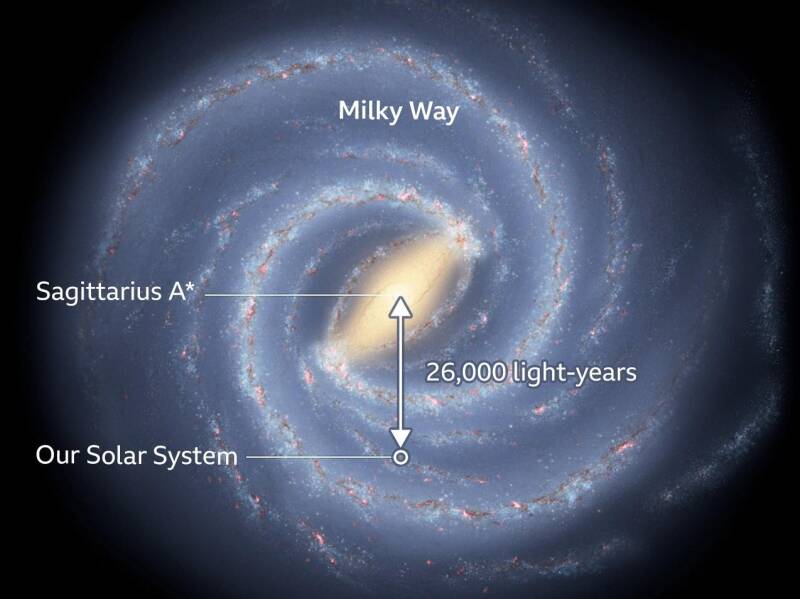
For comparison, the Milky Way galaxy is about 100,000 light-years across.
This means a dangerous gamma-ray burst would need to happen in our own galactic neighborhood.
The universe contains billions of galaxies, and gamma-ray bursts happen frequently somewhere in the cosmos. But the vast distances involved usually make them harmless to Earth.

Has Earth Ever Been Hit by a Gamma-Ray Burst?
Scientists have not confirmed that Earth has ever been directly hit by a dangerous gamma-ray burst.
However, there is evidence that our planet may have experienced powerful cosmic radiation events in the distant past.
One possible example is the mass extinction that occurred approximately 445 million years ago, known as the Ordovician extinction event.
Some researchers have suggested that a nearby gamma-ray burst could have contributed to this extinction by damaging Earth's ozone layer.
However, this remains a scientific hypothesis. Other explanations, such as climate changes and volcanic activity, are also considered possible causes.
Because gamma-ray bursts leave limited direct evidence after millions of years, proving an ancient event is extremely difficult.
Could a Gamma-Ray Burst From the Milky Way Hit Earth?
One of the biggest questions scientists ask is whether there are any nearby stars capable of producing a dangerous gamma-ray burst.
Not every massive star can create one.
The star would need to have specific characteristics, including:
- extremely high mass
- rapid rotation
- certain chemical properties
- the ability to create powerful jets during collapse
A famous example often discussed is Betelgeuse, a massive red supergiant star located about 640 light-years away.
Betelgeuse is expected to explode as a supernova someday, but scientists do not believe it is likely to create a dangerous gamma-ray burst aimed at Earth.
The reason is simple:
Even if Betelgeuse explodes, the conditions required for a gamma-ray burst are very specific, and its position and characteristics do not make it a likely threat.
What Would Happen If a Gamma-Ray Burst Hit Earth?
If a gamma-ray burst happened close enough to Earth and its powerful jet was aimed directly at our planet, the effects would not be immediate destruction like a Hollywood-style explosion.
Instead, the damage would happen through a chain reaction involving Earth’s atmosphere, climate, and living organisms.
A gamma-ray burst would arrive at the speed of light, meaning there would be no practical warning system that could give humans enough time to react. The radiation would reach Earth after traveling through space for years or even thousands of years.
The first impact would occur high in the atmosphere.
1. Damage to the Ozone Layer
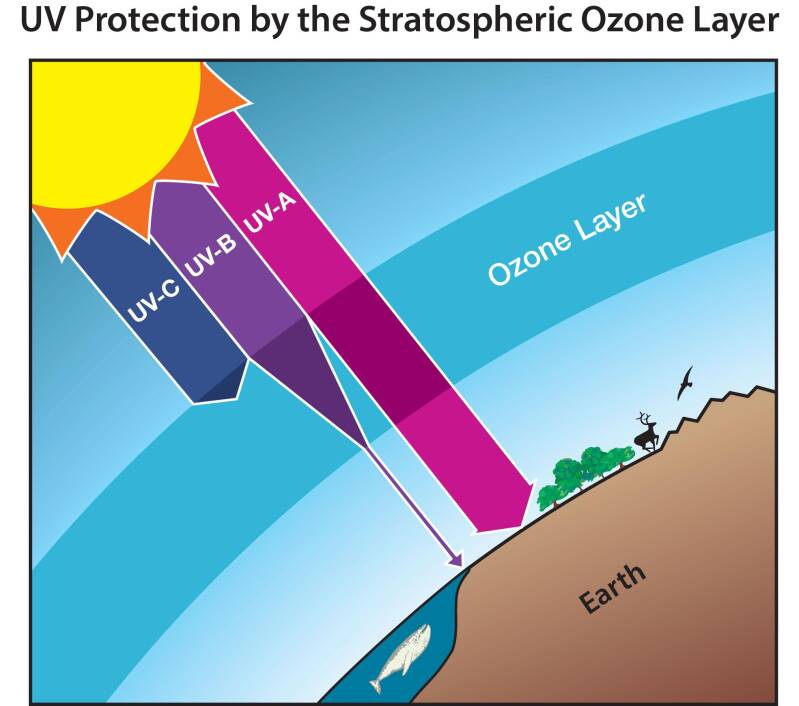
The ozone layer is one of Earth’s most important natural protections. Located in the stratosphere, it absorbs most of the Sun’s harmful ultraviolet (UV) radiation.
A nearby gamma-ray burst could break apart molecules in the atmosphere and create large amounts of nitrogen oxides.
These chemicals could react with ozone molecules and reduce the thickness of the ozone layer.
The result would be:
- more ultraviolet radiation reaching Earth’s surface
- increased risks for humans and animals
- damage to plants
- disruption of marine ecosystems
The loss of ozone would not happen instantly everywhere, but over time it could create serious environmental consequences.
2. Increased Ultraviolet Radiation
Without a healthy ozone layer, Earth would receive much stronger levels of UV radiation from the Sun.
For humans, increased UV exposure could lead to:
- higher rates of skin damage
- increased risk of eye problems
- stress on immune systems
However, humans would not be the only affected species.
Many organisms are extremely sensitive to ultraviolet radiation. Small organisms near the base of the food chain could suffer significant damage.
For example, phytoplankton in the oceans play a crucial role in producing oxygen and supporting marine ecosystems. A major decline in these organisms could affect entire food chains.
3. Possible Mass Extinction Event
One of the biggest concerns about a nearby gamma-ray burst is its potential to trigger a mass extinction.
Earth has experienced several major extinction events throughout its history. Scientists continue to investigate whether cosmic events may have contributed to some of them.
A powerful gamma-ray burst could potentially create conditions similar to other global disasters by:
- damaging ecosystems
- reducing biodiversity
- affecting food production
- changing atmospheric chemistry
However, it is important to understand that Earth would probably not become completely lifeless.
Life is extremely resilient.
Even after major extinction events caused by asteroid impacts, volcanic eruptions, and climate changes, life survived and eventually recovered.
A gamma-ray burst would most likely threaten complex surface life rather than completely destroy the planet.
Could Humans Survive a Gamma-Ray Burst?
This is one of the most interesting questions.
If a dangerous gamma-ray burst hit Earth, survival would depend on the strength of the event and how much damage occurred to the atmosphere.
Humans living on the surface would face serious challenges because we depend on stable ecosystems and protection from radiation.
Possible consequences could include:
- reduced agricultural productivity
- damage to ecosystems
- increased radiation exposure
- disruption of food supplies
However, humans are adaptable.
Unlike many species, humans have technology, infrastructure, and the ability to create protected environments.
Some groups might survive in:
- underground facilities
- heavily protected research stations
- artificial environments
But survival would depend on the scale of the event.
A gamma-ray burst strong enough to severely damage Earth's biosphere would represent one of the greatest challenges humanity has ever faced.
How Do Scientists Detect Gamma-Ray Bursts?
Because gamma-ray bursts happen randomly across the universe, scientists rely on specialized space telescopes to detect them.
Earth’s atmosphere blocks gamma rays, which is good for life but means ground-based telescopes cannot observe them directly.
Instead, astronomers use satellites positioned above the atmosphere.
Some important missions include:


NASA’s Swift Observatory
The NASA Swift Observatory has been one of the most important tools for studying gamma-ray bursts.
It can quickly identify new bursts and point its instruments toward them to study the afterglow.
The afterglow is the longer-lasting radiation that follows the initial explosion.
Fermi Gamma-ray Space Telescope
The Fermi Gamma-ray Space Telescope studies high-energy events throughout the universe.
It helps scientists understand:
- how gamma-ray bursts form
- how much energy they release
- how jets behave
- how they influence the universe around them
Why Do Scientists Study Gamma-Ray Bursts?
At first glance, gamma-ray bursts seem like distant cosmic dangers.
However, studying them helps scientists answer some of the biggest questions in astronomy.
Gamma-ray bursts provide information about:
- the lives and deaths of massive stars
- the formation of black holes
- the behavior of matter under extreme conditions
- the history of the early universe
Some gamma-ray bursts are so distant that they happened when the universe was much younger.
Because their light travels for billions of years before reaching Earth, observing them is like looking back in time.
A gamma-ray burst can reveal information about galaxies that existed when the universe was only a fraction of its current age.
The Most Powerful Gamma-Ray Burst Ever Detected
One of the most remarkable gamma-ray bursts ever observed was GRB 221009A.
Astronomers nicknamed it the BOAT, meaning:
“Brightest Of All Time.”
It was detected in 2022 and was so powerful that it temporarily affected measurements from spacecraft throughout the Solar System.
Scientists believe this burst came from a massive star collapse billions of light-years away.
Even though it was incredibly energetic, it posed no danger to Earth because of its enormous distance.
This event showed scientists just how extreme gamma-ray bursts can be.
Gamma-Ray Bursts vs Other Space Threats
When discussing cosmic dangers, gamma-ray bursts are often compared with other possible threats.
How do they compare?Gamma-Ray Burst vs Asteroid Impact
Asteroids are much more likely to affect Earth than gamma-ray bursts.
A large asteroid impact could directly destroy cities, create global climate changes, and cause mass extinction.
Unlike gamma-ray bursts, asteroids can sometimes be detected years before impact.
Scientists actively track near-Earth objects to identify possible risks.
Gamma-Ray Burst vs Solar Storm
Solar storms happen when the Sun releases large amounts of charged particles.
A powerful solar storm could damage:
- satellites
- communication systems
- power networks
However, Earth’s magnetic field provides significant protection.
Solar storms are much more common than gamma-ray bursts but usually less dangerous to life.
Gamma-Ray Burst vs Supernova
A nearby supernova explosion could also affect Earth.
Like gamma-ray bursts, supernovae involve massive stars reaching the end of their lives.
However, a typical supernova would need to be much closer than most gamma-ray bursts to create a serious threat.
The biggest difference is that gamma-ray bursts concentrate their energy into narrow beams, making them extremely powerful but also highly directional.
How Likely Is a Gamma-Ray Burst to Destroy Earth?
The probability is extremely small.
Gamma-ray bursts are rare events, and several conditions would all need to happen:
- A suitable massive star would need to explode.
- The explosion would need to create a powerful gamma-ray jet.
- The event would need to happen close enough to Earth.
- The jet would need to point directly at our planet.
This combination makes a dangerous gamma-ray burst one of the least likely natural disasters Earth could face.
Scientists estimate that a civilization-ending gamma-ray burst is far less likely than many other threats.
Are We Safe From Gamma-Ray Bursts?
For now, yes.
Earth exists in a relatively quiet region of the Milky Way.
Our galaxy contains many stars, but the nearest known potential gamma-ray burst sources are not considered immediate dangers.
The vastness of space provides enormous protection.
Distance is the most important factor.
A gamma-ray burst that would destroy life on a nearby planet can be completely harmless thousands or millions of light-years away.
Frequently Asked Questions About Gamma-Ray Bursts
Can a gamma-ray burst destroy Earth?
A gamma-ray burst could potentially cause global damage if it happened close enough and was aimed directly at Earth. It would likely damage the ozone layer rather than physically destroy the planet.
Are gamma-ray bursts stronger than nuclear bombs?
Yes. A gamma-ray burst releases vastly more energy than any human-made weapon. The total energy can exceed what stars produce over extremely long periods.
Could we stop a gamma-ray burst?
No. Humans currently have no technology capable of stopping or deflecting a gamma-ray burst.
Fortunately, there is no known nearby gamma-ray burst threat requiring action.
How often do gamma-ray bursts happen?
Gamma-ray bursts occur somewhere in the universe regularly, but they are rare in any single galaxy like the Milky Way.
Could a gamma-ray burst happen tomorrow?
It is theoretically possible, but extremely unlikely. Scientists monitor the universe and have not identified any nearby event that threatens Earth.
What is the closest gamma-ray burst?
Astronomers have detected many nearby bursts compared with the distant universe, but none close enough and aligned with Earth to create a known danger.
Final Conclusion: Can Gamma-Ray Bursts Destroy Earth?
Gamma-ray bursts are among the most powerful events in the universe. They represent the incredible forces that exist beyond our planet and remind us that Earth exists in a much larger cosmic environment.
So, can a gamma-ray burst destroy Earth?
Not in the way a giant explosion would destroy a planet. Earth itself would survive. The real danger would come from the radiation damaging our atmosphere and creating conditions that could threaten life.
However, the chance of a dangerous gamma-ray burst hitting Earth is extremely small.
The universe is enormous, and these explosions are usually located unimaginably far away. The conditions required for a gamma-ray burst to harm Earth are so specific that scientists do not consider them a realistic everyday threat.
Instead of fearing gamma-ray bursts, we can view them as one of the universe’s greatest scientific mysteries.
They show us how powerful stars can be, how galaxies evolve, and how much remains to be discovered about the cosmos.
Earth is not completely protected from every cosmic event, but our planet has survived billions of years of challenges.
And for now, gamma-ray bursts remain something fascinating to study — not something humanity needs to fear.
Want to Learn More?
Are you fascinated by space exploration, astronomy, and the greatest mysteries of our universe?
Follow our blog for more in-depth articles about NASA, historic space missions, scientific discoveries, and the facts behind the most discussed stories from space.
Stay informed about the latest developments as well as the fascinating mysteries that the universe still has waiting for us.
Francois Hoogstrate
Founder & Editor of DeepSpaceJournal
Francois Hoogstrate researches and writes about astronomy, NASA missions, cosmology, planetary science, and space exploration. His articles focus on presenting complex scientific topics in a clear, balanced, and accessible way, using information from official space agencies, scientific publications, and historical sources.
Sources & References
- NASA – Gamma-ray Bursts (Imagine the Universe!)
https://imagine.gsfc.nasa.gov/science/objects/grbs1.html - NASA – Neil Gehrels Swift Observatory
https://science.nasa.gov/mission/swift/ - NASA – Fermi Gamma-ray Space Telescope
https://science.nasa.gov/mission/fermi/ - ESA – Integral Mission: Gamma-Ray Astronomy
https://www.esa.int/Science_Exploration/Space_Science/Integral_overview - NASA – What Are Gamma Rays?
https://science.nasa.gov/ems/12_gammarays/ - American Astronomical Society – Astrophysical Journal (peer-reviewed GRB research)
https://iopscience.iop.org/journal/0004-637X - NASA Goddard Space Flight Center – Gamma-Ray Burst Research
https://svs.gsfc.nasa.gov/ - NASA – The Brightest Of All Time (GRB 221009A)
https://science.nasa.gov/universe/black-holes/nasas-fermi-mission-takes-stock-of-10-years-of-gamma-ray-bursts/
Research Papers
- Thomas, B. C., et al. (2005). Terrestrial ozone depletion due to a Milky Way gamma-ray burst.
https://arxiv.org/abs/astro-ph/0410680 - Melott, A. L., et al. (2004). Did a gamma-ray burst initiate the late Ordovician mass extinction?
https://arxiv.org/abs/astro-ph/0310259 - Piran, T. (2004). The Physics of Gamma-Ray Bursts.
https://arxiv.org/abs/astro-ph/0405503 - Kumar, P., & Zhang, B. (2015). The Physics of Gamma-Ray Bursts and Relativistic Jets.
https://arxiv.org/abs/1410.0679
Add comment
Comments