

Written by Francois Hoogstrate
Last update: 30-07-2026
Introduction
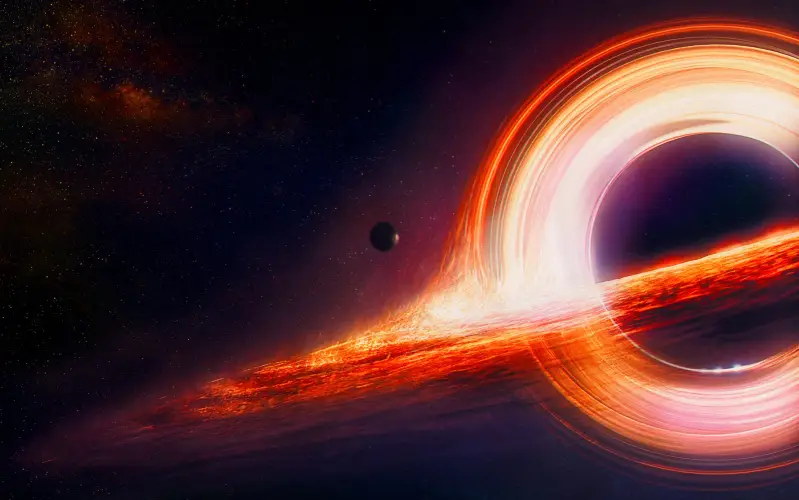
Black holes have fascinated humanity for decades. They are among the most mysterious and powerful objects in the universe, capable of bending space, slowing time, and trapping even light with their immense gravity. It's no surprise that one question keeps appearing in Google searches and science discussions alike:
Could a black hole reach Earth?
Movies often portray black holes as giant cosmic vacuum cleaners that drift through space, swallowing entire planets and galaxies without warning. Films such as Interstellar have sparked widespread interest in these mysterious objects, while countless documentaries and YouTube videos have raised questions about whether Earth could ever be in danger.
Fortunately, reality is much less frightening than fiction.
Although black holes are incredibly powerful, they also obey the laws of physics. Scientists have spent decades studying how they form, how they move, and how they interact with the rest of the universe. Thanks to powerful telescopes, gravitational wave detectors, and space observatories, we now know far more about black holes than ever before.
Quick Answer:
Yes, a black hole could theoretically reach Earth's region of space, but the probability is extraordinarily small. There is currently no known black hole heading toward our solar system, and astronomers would detect its gravitational effects long before it became a threat. Based on current scientific evidence, Earth is not in danger from a black hole.
Key Takeaways
- Black holes are extremely dense objects with gravity so strong that not even light can escape once it crosses the event horizon.
- Black holes do move through space, but the distances between stars make close encounters extraordinarily unlikely.
- There is no known black hole heading toward Earth.
- Rogue black holes probably exist, but they are incredibly difficult to detect and are spread across the vastness of the Milky Way.
- If a black hole with the same mass as the Sun replaced it, Earth would continue orbiting normally—but life would disappear because sunlight would be gone.
- Scientists detect black holes by observing nearby stars, X-rays, gravitational waves, and the shadows cast by supermassive black holes.
- Recent discoveries continue to improve our understanding, but current evidence strongly indicates that Earth is safe.
Table of Contents
- What Is a Black Hole?
- Different Types of Black Holes
- Do Black Holes Move Through Space?
- Could a Black Hole Reach Earth?
- Could a Black Hole Enter Our Solar System?
- Where Is the Nearest Known Black Hole?
- Myth vs. Reality
- What Would Happen If a Black Hole Passed Near Earth?
- Are Rogue Black Holes Real?
- Could Earth Fall Into a Black Hole?
- What Would You Experience Near a Black Hole?
- How Do Scientists Detect Black Holes?
- Black Holes in Popular Culture vs. Scientific Reality
- A Brief History of Black Hole Research
- Why Studying Black Holes Matters
- Frequently Asked Questions
Let's dive into one of the universe's greatest mysteries.
1. What Is a Black Hole?
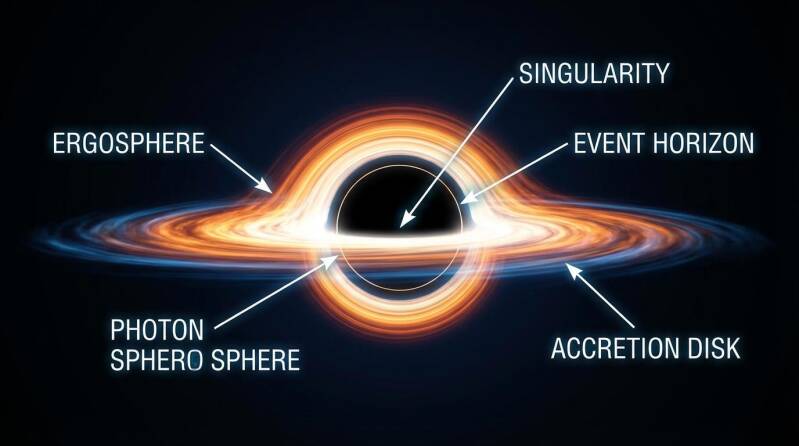
A black hole is a region in space where gravity is so intense that nothing—not even light—can escape once it passes the boundary known as the event horizon.
Unlike planets or stars, black holes don't have a solid surface. Instead, they contain an enormous amount of mass compressed into an incredibly small space. This creates gravitational forces unlike anything we experience on Earth.
Albert Einstein's Theory of General Relativity predicted the existence of black holes more than a century ago. At first, many scientists believed these strange objects were purely mathematical possibilities. Today, however, thousands of black holes have been discovered throughout the Milky Way, and astronomers estimate that millions more remain hidden.
Despite their reputation, black holes are not giant holes in space. They're simply extremely dense objects whose gravity is extraordinarily strong.
How Do Black Holes Form?
Most black holes begin life as massive stars.
Every star produces energy through nuclear fusion. This outward pressure balances the inward pull of gravity, keeping the star stable for millions or even billions of years.
Eventually, however, the star runs out of fuel.
Without enough energy pushing outward, gravity wins.
The star collapses under its own weight.
For stars many times larger than our Sun, this collapse can create a black hole.
The remaining core becomes so dense that it compresses into an incredibly tiny volume while retaining enormous mass.
Scientists also believe black holes can grow by:
- Merging with other black holes
- Pulling in gas and dust
- Consuming nearby stars
- Absorbing entire star systems over billions of years
The largest black holes found today likely formed through repeated mergers over cosmic time.
2. Different Types of Black Holes
Not all black holes are the same.
Stellar Black Holes
These are the most common type.
They usually contain between five and fifty times the mass of our Sun and are created when massive stars die.
Thousands have already been detected in our galaxy.
Supermassive Black Holes
These enormous giants reside at the centers of almost every known galaxy.
They can contain millions—or even billions—of solar masses.
The Milky Way's own supermassive black hole, Sagittarius A*, contains around four million times the mass of our Sun.
Despite its incredible size, it poses no danger to Earth because it lies approximately 26,000 light-years away.
Intermediate Black Holes
These mysterious objects are thought to bridge the gap between stellar and supermassive black holes.
Astronomers have discovered strong evidence for several candidates, although research continues.
Understanding intermediate black holes may reveal how supermassive black holes became so enormous.
Primordial Black Holes
Some cosmologists have proposed that tiny black holes formed shortly after the Big Bang.
These hypothetical objects remain undiscovered.
If they exist, they could even contribute to the mysterious substance known as dark matter.


3. Do Black Holes Move Through Space?
Absolutely.
One of the biggest misconceptions is that black holes remain fixed forever.
In reality, they travel through the Milky Way just like stars.
Every object in our galaxy orbits the galactic center.
Black holes are no exception.
Some even move at extraordinary speeds.
When the massive star that created a black hole explodes as a supernova, the explosion isn't always perfectly symmetrical.
The imbalance can give the newly formed black hole a powerful "kick," sending it racing through space at hundreds of kilometers per second.
Fortunately, space is unimaginably vast.
Even fast-moving black holes rarely come close to other stars.


4. Could a Black Hole Reach Earth?
Technically...
Yes.
Practically...
Almost certainly not.
This distinction is important.
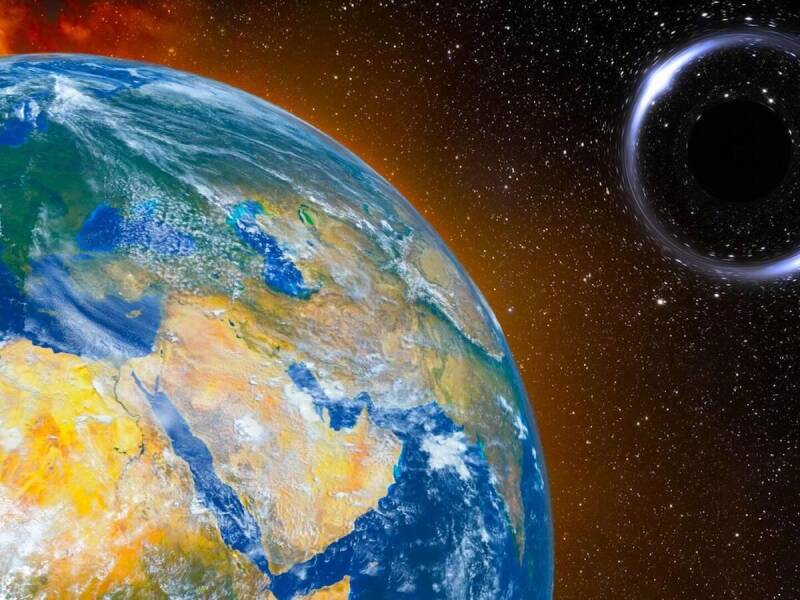
Physics doesn't forbid a wandering black hole from entering our part of the Milky Way.
However, the probability is extraordinarily small.
Imagine throwing a grain of sand into the Atlantic Ocean and expecting it to collide with a single drop of water moving thousands of kilometers away.
That's still a far simpler scenario than a black hole randomly intersecting Earth's orbit.
The Milky Way spans about 100,000 light-years.
Most stars are separated by several light-years.
Black holes are even rarer.
The universe simply contains too much empty space.
This makes accidental encounters exceptionally unlikely.

5. Could a Black Hole Enter Our Solar System?
Scientists cannot completely rule it out.
But every observation suggests it won't happen anytime soon.
If a massive object entered our solar system, its gravity would immediately begin disturbing planetary orbits.
Astronomers constantly monitor:
- Planet motions
- Asteroids
- Comets
- Nearby stars
- Gravitational effects
A black hole approaching the Sun would alter these movements long before reaching Earth.
We would likely know decades—or even centuries—in advance.
Current observations show absolutely no evidence that any known black hole is heading toward our solar system.


6. Where Is the Nearest Known Black Hole?
The closest confirmed black holes remain over a thousand light-years away.
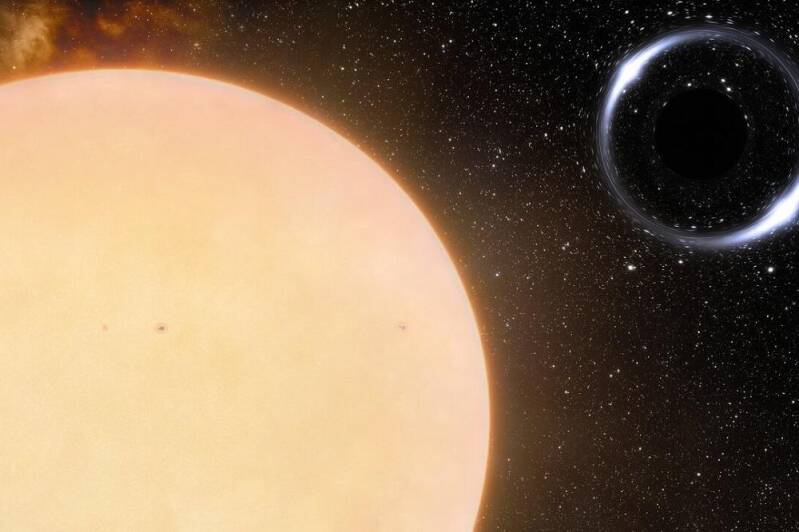
One famous example is Gaia BH1.
Located roughly 1,560 light-years from Earth, it is considered one of the nearest confirmed stellar black holes ever discovered.
To appreciate this distance:
- Light from the Sun reaches Earth in about 8 minutes.
- Light from the Moon arrives in just over one second.
- Light from Gaia BH1 takes more than 1,500 years.
Even if it somehow traveled directly toward us—a scenario with no supporting evidence—it would require an enormous amount of time to arrive.
Simply put, Earth is not in danger.

7. Myth vs. Reality
One reason people fear black holes is that Hollywood often exaggerates their behavior.
Let's separate fact from fiction.
Myth: Black holes suck everything in.
Reality: They only exert dangerous gravitational effects when you're extremely close.
Myth: A black hole could suddenly appear.
Reality: Black holes form through enormous cosmic events. They don't randomly materialize near Earth.
Myth: Black holes constantly grow larger.
Reality: Many black holes spend millions of years barely consuming any material at all.
Myth: The Large Hadron Collider could create a dangerous black hole.
Reality: Scientists have shown that any microscopic black hole, if created at all, would disappear almost instantly through Hawking radiation.
Myth: Black holes destroy entire galaxies.
Reality: Supermassive black holes actually help galaxies evolve and remain gravitationally organized.


8. What Would Happen If a Black Hole Passed Near Earth?
This is where science becomes fascinating.
Although incredibly unlikely, researchers have modeled what might happen.
Earth's Orbit Could Change
The black hole's gravity might slightly alter Earth's path around the Sun.
Even small changes could dramatically affect our climate.
Comets Could Be Disturbed
The distant Oort Cloud contains billions of icy objects.
A passing black hole could disturb these objects, sending more comets toward the inner solar system.
Planetary Orbits Could Become Unstable
Jupiter, Saturn, and the other planets influence one another gravitationally.
A black hole passing nearby might disrupt this delicate balance.
Extreme Tidal Forces
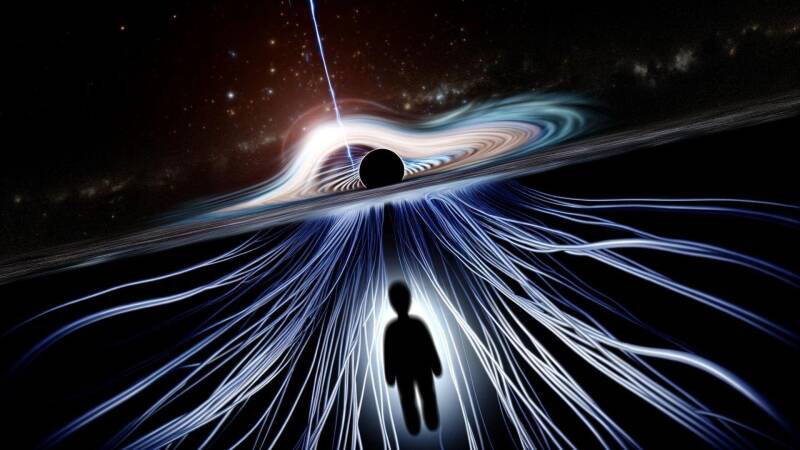
If Earth came dangerously close, tidal forces would stretch the planet.
This process is popularly known as spaghettification because objects become elongated like spaghetti.
Fortunately, this would require an impossibly close encounter.

9. Are Rogue Black Holes Real?
Yes—they almost certainly are.
A rogue black hole is a black hole that travels through space without orbiting a star. Unlike most stellar black holes, which remain part of a binary star system or orbit within a stable region of the Milky Way, rogue black holes wander alone through interstellar space.
But how does a black hole become "rogue"?
Astronomers believe there are several possible explanations.
Supernova Kicks
When a massive star explodes in a supernova, the explosion isn't always perfectly symmetrical. If more material is blasted out in one direction than another, the newly formed black hole can receive a powerful gravitational "kick."
Some of these kicks can launch a black hole at hundreds of kilometers per second.
Galaxy Collisions
Galaxies frequently collide over billions of years. During these enormous events, stars and black holes can be gravitationally scattered into entirely new orbits.
Occasionally, a black hole may even be ejected from its original location.
Black Hole Mergers
When two black holes collide, they release enormous amounts of energy through gravitational waves. If the merger is uneven, the newly formed black hole can receive a recoil velocity that sends it drifting through space.
Scientists have already observed dozens of black hole mergers through gravitational wave detectors like LIGO and Virgo.
How Many Rogue Black Holes Exist?
No one knows the exact number.
However, astronomers estimate that the Milky Way could contain millions of stellar black holes, many of which may be wandering independently.
That sounds alarming until you remember one important fact:
Space is almost completely empty.
Even if millions of rogue black holes exist, they are spread across a galaxy that is about 100,000 light-years wide.
The average distance between stars is measured in light-years.
The chances of one passing dangerously close to Earth are therefore extraordinarily small.

10. Could Earth Fall Into a Black Hole?
This question often appears in Google searches.
The simple answer is:
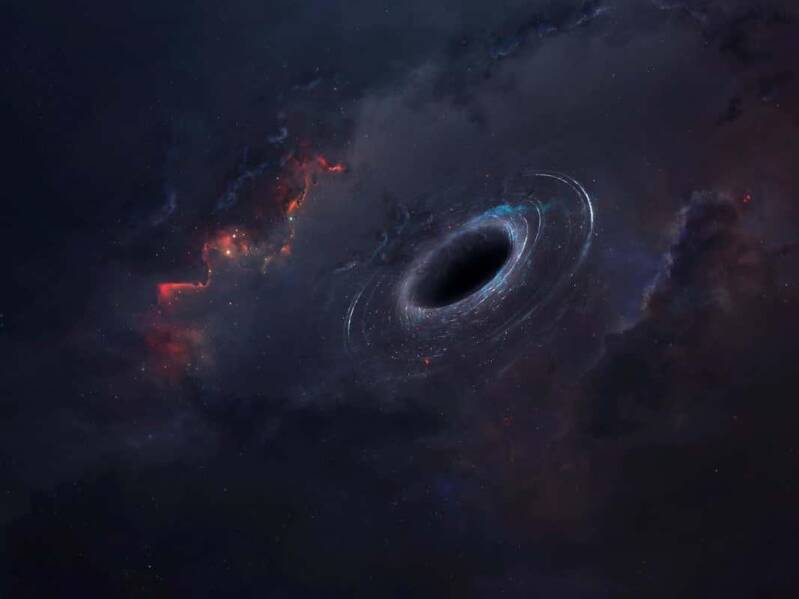
No—not under any known circumstances.
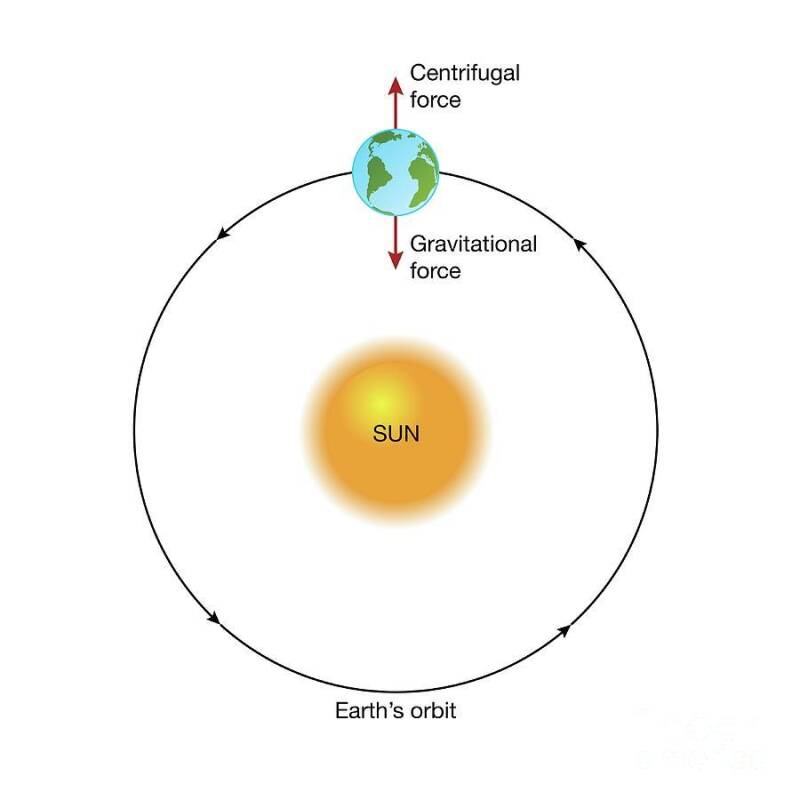
Earth follows a remarkably stable orbit around the Sun.
The planets have remained in similar orbits for billions of years.
Nothing suggests our solar system is heading toward a black hole.
For Earth to fall into one, several highly unlikely events would need to happen.
For example:
- A rogue black hole would have to enter our solar system.
- It would need to pass close enough for its gravity to overpower the Sun's.
- Earth's orbit would need to become unstable.
- The planet would then have to spiral inward instead of escaping.
Each of these events is already extremely unlikely.
Combined together, the probability becomes unimaginably small.
11. What Would You Experience Near a Black Hole?
Let's imagine a purely hypothetical journey.
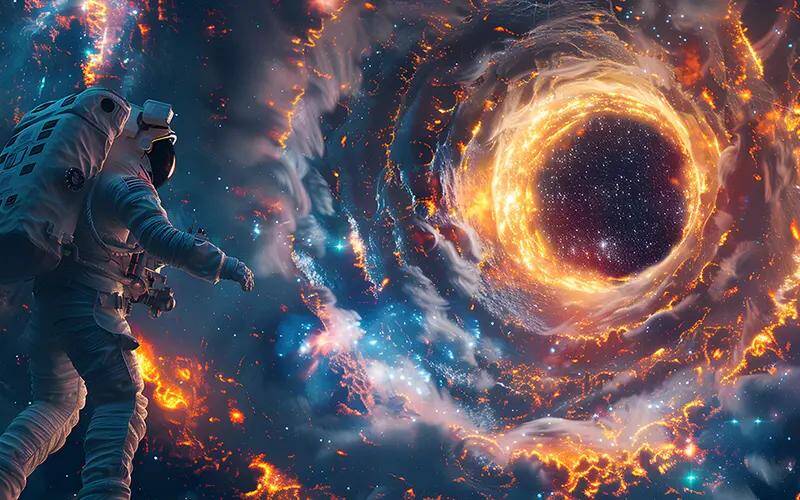
Suppose a spacecraft approached a stellar black hole.
At first, nothing dramatic would happen.
Because gravity weakens with distance, the spacecraft could orbit the black hole safely if it stayed far enough away.
In fact, astronauts might not immediately notice anything unusual.
As the spacecraft moved closer, however, strange effects predicted by Einstein's theory of relativity would begin to appear.
Time Would Slow Down
One of the most remarkable consequences of extreme gravity is gravitational time dilation.
Time passes more slowly in stronger gravitational fields.
To the astronauts aboard the spacecraft, time would feel perfectly normal.
But an observer watching from Earth would see their clocks ticking more slowly.
This effect has already been measured around Earth using highly accurate atomic clocks, although on a much smaller scale.
Near a black hole, the effect becomes dramatically stronger.
Light Would Behave Strangely
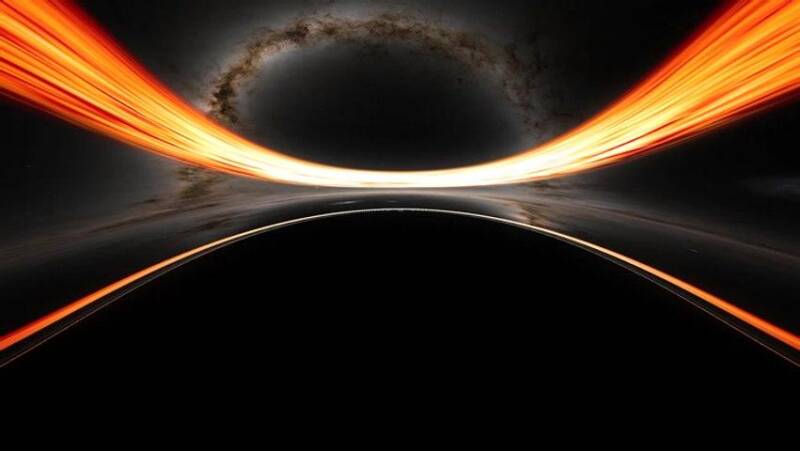
The black hole's gravity bends light, a phenomenon known as gravitational lensing.
Stars behind the black hole could appear distorted, stretched into arcs, or even duplicated.
This effect allows astronomers to detect otherwise invisible objects.
Spaghettification
As the spacecraft approached the event horizon of a stellar black hole, the difference in gravity between its front and back would become enormous.
Your feet would experience stronger gravity than your head.
Eventually, this tidal force would stretch your body into a long, thin shape.
Scientists jokingly call this process spaghettification.
While the name sounds humorous, the process would be fatal long before reaching the event horizon of a small black hole.
Interestingly, near a supermassive black hole, tidal forces at the event horizon can be much weaker.
An astronaut might cross the event horizon without immediately noticing—although escaping afterward would still be impossible.
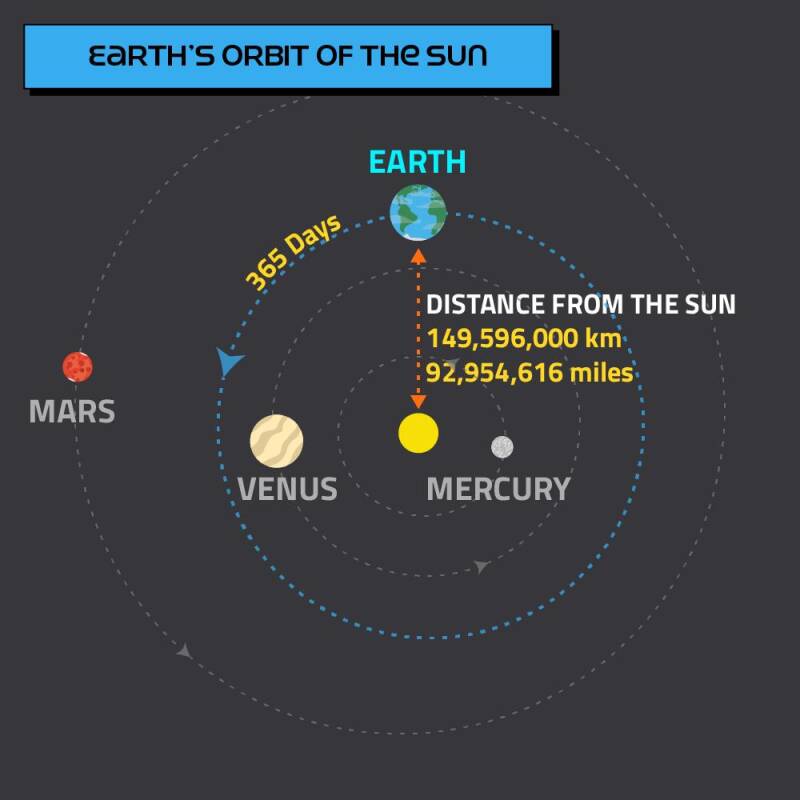
What If the Sun Became a Black Hole?
This is one of astronomy's most famous thought experiments.
Imagine the Sun instantly transformed into a black hole while keeping exactly the same mass.
Would Earth be swallowed?
Surprisingly...
No.
Gravity depends on mass and distance—not on whether an object is a star or a black hole.
Because the Sun's mass would remain unchanged:
- Earth would continue orbiting normally.
- Jupiter would stay in its orbit.
- Mars, Venus, and the other planets would also continue following their paths.
The real catastrophe would be the disappearance of sunlight.
Without solar energy:
- Temperatures would rapidly fall.
- Photosynthesis would stop.
- Most plants would die.
- Food chains would collapse.
- Oceans would gradually freeze from the surface downward.
Life on Earth would become nearly impossible—not because of gravity, but because our planet depends on the Sun's light and heat.
Why the Sun Will Never Become a Black Hole
Fortunately, this scenario will never happen.
The Sun simply isn't massive enough.
To become a black hole, a star generally needs to begin its life with at least 20 times the Sun's mass.
Our Sun is considered a medium-sized star.
In roughly five billion years, it will expand into a red giant before shedding its outer layers and leaving behind a white dwarf.
No black hole will form.

12. How Do Scientists Detect Black Holes?
Since black holes emit no visible light, detecting them requires creative methods.
Fortunately, astronomers have developed several remarkably effective techniques.
Watching Nearby Stars
One of the easiest ways to discover a black hole is by observing the motion of nearby stars.
If a visible star appears to orbit an invisible companion with enormous mass, astronomers can calculate that the unseen object is likely a black hole.
This method led to the discovery of several nearby stellar black holes.
X-ray Observations
Many black holes pull gas from nearby stars.
As this material spirals inward, it forms an accretion disk.
Friction heats the gas to millions of degrees.
Before crossing the event horizon, the material emits powerful X-rays that space telescopes can detect.
Ironically, the brightest part of a black hole isn't the black hole itself—it's the superheated material falling into it.
Gravitational Waves
One of the greatest scientific breakthroughs of the 21st century occurred in 2015.
Scientists detected gravitational waves for the first time.
These tiny ripples in spacetime were produced when two black holes collided more than a billion light-years away.
The discovery confirmed one of Einstein's final major predictions and opened an entirely new way of studying the universe.
Today, dozens of black hole mergers have been detected.
Each observation helps scientists understand how black holes form, grow, and evolve.
Direct Imaging
In 2019, astronomers achieved what once seemed impossible.
Using the Event Horizon Telescope—a global network of synchronized radio telescopes—they captured the first image of a black hole's shadow.
The image showed the supermassive black hole at the center of galaxy M87.
In 2022, the same collaboration released the first image of Sagittarius A*, the black hole at the center of our own Milky Way.
These historic achievements provided some of the strongest evidence yet that black holes behave almost exactly as Einstein predicted more than 100 years ago.
Recent Black Hole Discoveries (2024–2026)
Research into black holes is advancing rapidly.
Over the past few years, astronomers have made several exciting discoveries that continue to reshape our understanding of the universe.
Among the most important developments are:
- Improved observations of Sagittarius A*, revealing new details about the turbulent gas surrounding our galaxy's central black hole.
- Additional gravitational wave detections, allowing scientists to observe more black hole mergers than ever before.
- New evidence suggesting that some intermediate-mass black holes may exist inside dense star clusters.
- Artificial intelligence helping astronomers identify hidden black holes within enormous astronomical datasets.
- More detailed computer simulations showing how supermassive black holes influence the growth and evolution of galaxies over billions of years.
Every year brings new discoveries, and future observatories promise even more remarkable insights into these mysterious cosmic objects.


13. Black Holes in Popular Culture vs. Scientific Reality
Black holes have inspired countless movies, novels, television series, and video games. Their mysterious nature makes them perfect for science fiction, but Hollywood often sacrifices scientific accuracy for dramatic storytelling.
Let's compare fiction with reality.
Myth: Black Holes Are Giant Cosmic Vacuum Cleaners
This is perhaps the most common misconception.
Many films show black holes pulling in everything nearby like enormous vacuum cleaners.
In reality, gravity only becomes extremely dangerous when you're relatively close.
If our Sun were somehow replaced by a black hole with the same mass, Earth would continue orbiting exactly as it does today. The planet wouldn't suddenly spiral inward. The only difference is that we'd lose sunlight, causing Earth to freeze over.
A black hole's gravity follows the same physical laws as the gravity of any other object with the same mass.
Myth: Crossing the Event Horizon Means Instant Death
Science suggests the answer depends on the size of the black hole.
Near a small stellar black hole, the tidal forces close to the event horizon are so extreme that an astronaut would be torn apart before crossing it.
Near a supermassive black hole, however, the gravitational gradient at the event horizon is much gentler. In theory, an astronaut might cross the event horizon without immediately noticing anything unusual.
What happens after that remains one of physics' greatest unanswered questions.
Myth: Wormholes and Black Holes Are the Same Thing
Movies sometimes treat black holes as portals through space and time.
While Einstein's equations allow for the mathematical possibility of wormholes, no evidence has ever confirmed that they exist.
Black holes and wormholes are entirely different theoretical objects.
Scientists have observed black holes.
No one has ever observed a wormhole.
Myth: Every Galaxy Contains a Dangerous Black Hole
Almost every large galaxy appears to host a supermassive black hole at its center.
That may sound alarming.
In reality, these black holes are incredibly far away from the stars that orbit them.
Our own solar system has safely orbited the center of the Milky Way for billions of years.
Sagittarius A* poses no known threat to Earth.

14. A Brief History of Black Hole Research
Understanding black holes has taken more than a century of scientific progress.
Here's a timeline of some of the most important milestones.
1783 – The First Idea
English scientist John Michell proposed the idea of "dark stars" whose gravity would be so strong that even light could not escape.
Although he lacked modern physics, his concept was remarkably close to today's understanding of black holes.
1915 – Einstein's General Relativity
Albert Einstein published his revolutionary theory describing gravity as the curvature of spacetime.
This theory made black holes mathematically possible.
1916 – Karl Schwarzschild
Soon after Einstein's publication, Karl Schwarzschild found the first exact mathematical solution describing what we now call a black hole.
The "Schwarzschild radius" remains one of the most important concepts in black hole physics.
1967 – The Name "Black Hole"
Physicist John Wheeler popularized the term black hole.
The name quickly became accepted by scientists around the world.
1974 – Hawking Radiation
Stephen Hawking proposed that black holes are not entirely black.
According to quantum mechanics, they should slowly emit tiny amounts of radiation and eventually evaporate over incredibly long periods of time.
Although Hawking radiation has not yet been observed directly, it remains one of the most influential ideas in modern theoretical physics.
2015 – Gravitational Waves Detected
The LIGO observatory detected gravitational waves produced by two colliding black holes.
This historic discovery confirmed another major prediction of Einstein's theory and opened a completely new field of astronomy.
2019 – First Image of a Black Hole
The Event Horizon Telescope collaboration released humanity's first image of a black hole's shadow.
The image became one of the most iconic scientific photographs ever taken.
2022 – Sagittarius A
Astronomers released the first image of the supermassive black hole at the center of the Milky Way.
For the first time, humanity could directly observe the object around which our entire galaxy revolves.
2024–2026 – A New Era of Discovery
Modern observatories, artificial intelligence, and increasingly sensitive gravitational-wave detectors continue to reveal new black hole candidates, mergers, and insights into how galaxies evolve.
Scientists believe the next decade may completely transform our understanding of black holes.


15. Why Studying Black Holes Matters
At first glance, black holes might seem like distant curiosities with little relevance to everyday life.
In reality, they help answer some of the biggest questions in science.
Researchers study black holes to better understand:
- How galaxies form and evolve.
- How gravity behaves under extreme conditions.
- The relationship between quantum mechanics and general relativity.
- The life cycles of massive stars.
- The origin and evolution of the universe itself.
Black holes serve as natural laboratories where the laws of physics are pushed to their limits.
Every new discovery helps scientists test theories that cannot be recreated in laboratories on Earth.
Could Humans Ever Travel to a Black Hole?
Probably not.
The nearest known black holes are more than a thousand light-years away.
Even the fastest spacecraft humanity has ever built would need tens of thousands of years—or far longer—to reach them.
Future propulsion technologies could shorten those travel times, but interstellar travel remains one of humanity's greatest engineering challenges.
For now, our best tools are powerful telescopes and space observatories that allow us to study black holes from a safe distance.
16. Frequently Asked Questions
Can a black hole suddenly appear near Earth?
No.
Black holes form through massive cosmic events, such as the collapse of large stars or the merger of compact objects. They do not suddenly materialize in our solar system.
Is there a black hole heading toward Earth?
No.
Astronomers monitor nearby stars and other celestial objects closely. There is currently no evidence that any known black hole is moving toward Earth.
What is the closest black hole to Earth?
The nearest confirmed stellar black holes are still more than a thousand light-years away, making them far too distant to pose any danger.
Could a rogue black hole enter the solar system?
In theory, yes.
In practice, the probability is extraordinarily small because of the immense distances between objects in our galaxy.
Would a black hole swallow the entire solar system?
Only if it passed extremely close, which is considered extraordinarily unlikely.
Even then, gravitational effects would influence the planets long before any direct encounter occurred.
Can Earth escape a black hole?
If Earth somehow ventured too close to a black hole, escaping would become impossible after crossing the event horizon.
Fortunately, there is no realistic scenario in which this is expected to happen.
Can black holes die?
According to Stephen Hawking's theory, black holes slowly lose energy through Hawking radiation.
Large black holes would take an unimaginably long time—far longer than the current age of the universe—to completely evaporate.
Are black holes dangerous?
Only if you get very close to one.
Because the nearest known black holes are thousands of light-years away, they pose no danger to Earth.
Final Thoughts
So, could a black hole reach Earth?
From a purely scientific perspective, the answer is yes—it is theoretically possible. Black holes move through the Milky Way just like stars, and rogue black holes likely wander through interstellar space.
However, the chance of one reaching our solar system is so incredibly small that astronomers do not consider it a realistic threat.
The universe is unimaginably vast. Black holes are relatively rare, and modern astronomy allows scientists to detect massive objects long before they could approach our cosmic neighborhood.
Rather than fearing black holes, we should appreciate them as some of the universe's most extraordinary natural phenomena. They have helped confirm Einstein's theories, revealed the existence of gravitational waves, and continue to challenge our understanding of space, time, and gravity.
Every new observation brings us closer to answering profound questions about the nature of reality. Future telescopes, next-generation gravitational-wave observatories, and advanced computer simulations will almost certainly uncover discoveries that reshape our understanding of black holes once again.
For now, there is no evidence that Earth is in danger from a black hole. Instead, these mysterious objects remain distant cosmic laboratories, helping scientists unlock the deepest secrets of the universe.
Conclusion
Black holes have earned their reputation as one of the universe's greatest mysteries. They stretch our understanding of physics, challenge our imagination, and inspire scientists to keep exploring the cosmos.
The question "Could a Black Hole Reach Earth?" captures our natural curiosity about the unknown. While the answer is technically yes in the broadest theoretical sense, everything we know about astronomy tells us that such an event is extraordinarily improbable.
Instead of worrying about black holes swallowing our planet, we can appreciate the remarkable progress humanity has made in understanding them. From Einstein's equations to the first image of a black hole and the detection of gravitational waves, each breakthrough reminds us that the universe is both stranger and more beautiful than we once imagined.
As technology advances, future generations will undoubtedly uncover even more secrets hidden within these cosmic giants. Until then, black holes remain one of science's most fascinating frontiers—and one of the best reminders of just how vast and extraordinary our universe truly is.
More Black Hole News? ---> CLICK HERE!
Want to Learn More?
Are you fascinated by space exploration, astronomy, and the greatest mysteries of our universe?
Follow our blog for more in-depth articles about NASA, historic space missions, scientific discoveries, and the facts behind the most discussed stories from space.
Stay informed about the latest developments as well as the fascinating mysteries that the universe still has waiting for us.
Francois Hoogstrate
Founder & Editor of DeepSpaceJournal
Francois Hoogstrate researches and writes about astronomy, NASA missions, cosmology, planetary science, and space exploration. His articles focus on presenting complex scientific topics in a clear, balanced, and accessible way, using information from official space agencies, scientific publications, and historical sources.
Sources & References
- Official Space Agencies
- NASA – Black Holes
https://science.nasa.gov/universe/black-holes/ - Uitgebreide uitleg over zwarte gaten, hun ontstaan en eigenschappen.
- NASA – Imagine the Universe! Black Holes
https://imagine.gsfc.nasa.gov/science/objects/black_holes1.html - Educatieve informatie van NASA Goddard.
- European Space Agency (ESA) – Gaia Mission
- https://www.esa.int/Science_Exploration/Space_Science/Gaia
- Bron voor Gaia BH1 en de Gaia-missie.
- Black Hole Imaging
- Event Horizon Telescope
- https://eventhorizontelescope.org/
- Officiële website van het Event Horizon Telescope-project.
- First Image of M87 Black Hole
- https://eventhorizontelescope.org/press-release-april-10-2019-astronomers-capture-first-image-black-hole
- Sagittarius A*
- https://eventhorizontelescope.org/press-release-first-image-black-hole-milky-way-galaxy
- Gravitational Waves
- LIGO Scientific Collaboration
- https://www.ligo.org/
- Officiële website.
- Virgo Collaboration
- https://www.virgo-gw.eu/
- Space Telescopes
- Hubble Space Telescope
- https://science.nasa.gov/mission/hubble/
- James Webb Space Telescope
- https://science.nasa.gov/mission/webb/
- Scientific Literature
- Einstein, A. (1915). The Field Equations of Gravitation.
- https://einsteinpapers.press.princeton.edu/
- Schwarzschild, K. (1916).
- On the Gravitational Field of a Point Mass.
- https://ui.adsabs.harvard.edu/
- Hawking, S. W. (1974).
- Black Hole Explosions?
- Nature.
- https://www.nature.com/articles/248030a0
- Scientific Organizations
- International Astronomical Union
- https://www.iau.org/
- National Radio Astronomy Observatory
- https://public.nrao.edu/
- Chandra X-ray Observatory
- https://chandra.harvard.edu/
- Further Reading
- NASA Exoplanet Exploration
- https://science.nasa.gov/exoplanets/
- ESA Science
- https://www.esa.int/Science_Exploration
Add comment
Comments